
Site readiness means confirming your storage, equipment, documents, and people before the shipment arrives. Most storage damage is decided before delivery, by where the product goes, how it is handled, and what it sits next to. This guide covers bulk chemical storage requirements in practical terms, so you can prepare after your order is placed.
It covers solids and liquids, with six common export chemicals as examples: urea, caustic soda flakes, ammonium sulfate (also spelled sulphate), calcium chloride, methanol, and sulfuric acid. It does not replace the safety data sheet, which is always the first source.
Start With the SDS: Sections 7 and 10
The safety data sheet (SDS) tells you how a specific product should be handled. Two sections matter most for bulk chemical storage requirements. Read them before you decide where the product will go.
- SDS Section 7 (handling and storage) covers safe handling practices, storage conditions, and materials to keep away from the product. Use it to plan the storage area, the equipment, and the training your staff need.
- SDS Section 10 (stability and reactivity) describes what can make the product unstable and which materials or conditions it reacts with. Use it to decide what must be stored apart from it.
Ask your supplier for the SDS for your exact product before the order ships. If your site already holds other chemicals, compare their Section 7 and Section 10 entries with the new product’s. This simple step catches most layout problems early. We do not reproduce product data here, because your own SDS is the authoritative source.
How Should Bulk Chemicals Be Stored Before Use?
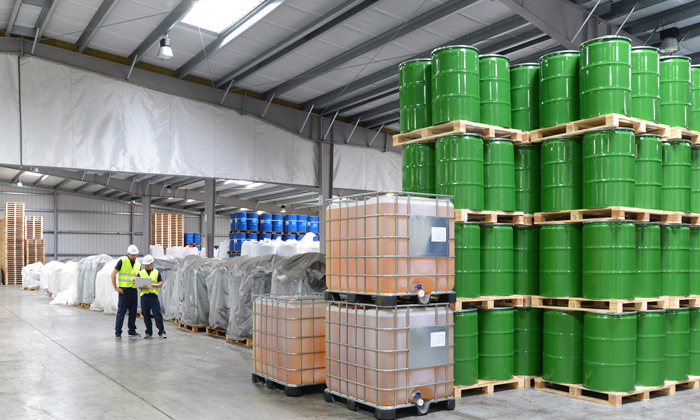
The short answer: in a place suited to that product, protected from the conditions the SDS warns about, and kept apart from materials it could react with. In practice, bulk chemical storage requirements start with the physical form, because solids and liquids fail in different ways.
| Check | Bagged solids | Liquids |
|---|---|---|
| Base | Clean, dry, level floor, with pallets that keep bags off the ground | Level base suited to the weight of the tank or IBC |
| Moisture and weather | Protected from rain, damp floors, and leaks; packaging kept intact | Protected from water getting into tanks, vents, and fittings |
| Stacking | Limited stack height so the lower bags are not crushed or compacted | Tanks and IBCs kept within their rated filling and stacking limits |
| Compatibility | Storage area free of incompatible products | Tank, hose, seal, and fitting materials compatible with the liquid |
| Containment | Spill clean-up plan for burst bags | Secondary containment or bunding sized for a leak |
| Air and venting | Dry, ventilated area | Correct venting and ventilation, away from ignition sources where relevant |
Bagged vs bulk solids is a useful distinction. Bagged product is easy to separate into lots, but each bag can tear or leak. Solids stored loose in a bin or heap are more exposed to moisture and to compaction. For liquids, a tank farm or set of storage tanks needs proper containment, labeling, and a clear transfer procedure.
Moisture and Caking: Hygroscopic Chemicals Storage
Hygroscopic means a material takes up moisture from the air. Several common bulk chemicals behave this way, including urea, caustic soda flakes, and calcium chloride, and ammonium sulfate can clump when damp. The effect depends on humidity, temperature, and how well the packaging protects the product. A sealed bag in a dry store is very different from an open bag in a humid warehouse.
Why Urea Caking Happens
People often ask why urea cakes. Urea absorbs moisture at the surface of each particle. That moisture dissolves a thin layer of the product. If conditions change, for example if the air dries or the temperature moves, the dissolved material recrystallizes and forms small bridges between neighboring particles. Enough bridges turn loose product into lumps or a solid block.
Research on fertilizer caking points to several factors that make it worse: moisture content, product temperature, ambient humidity, storage time, and the pressure from material stacked above. Fine dust also encourages caking, because it has more surface area to absorb moisture. Many fertilizers have a critical relative humidity, above which they start absorbing moisture. The value differs by product, so use your supplier’s information, not a general rule.
How to Prevent Caking in Stored Fertilizer
If you ask how to prevent caking in stored fertilizer, the answer is to control the factors above:
- Keep the product in its original, sealed packaging until you need it.
- Store it in a dry, covered area, on pallets, off the floor and away from walls that may be damp.
- Avoid very tall stacks, which add pressure to the bags at the bottom.
- Avoid large swings in temperature and humidity where you can.
- Close or reseal partly used bags straight away.
- Use older stock first.
The same habits help other moisture-sensitive products. Caustic soda flakes absorb moisture readily, so an open bag can change condition quickly. If you plan to buy caustic soda flakes, prepare a dry, closed storage area and a plan for partly used bags. Damaged bags are a common point where moisture gets in, so check them first.
Chemical Segregation Storage
Chemical segregation storage rests on one principle: keep materials that react badly with each other in separate places. Acids belong away from alkalis, and oxidizers belong away from flammable materials. Sulfuric acid and caustic soda, for example, should never share a space or a containment area, and methanol, a flammable liquid, should be kept away from oxidizers and ignition sources.
Use the SDS to confirm what each product must stay apart from. Secondary containment, often called bunding, catches leaked liquid so it cannot reach drains or mix with a neighboring product. Each containment area should serve only compatible products, because a shared bund can bring incompatible liquids together.
Ventilation matters too, especially for volatile liquids and enclosed areas. Incompatible materials include more than other chemicals: metals, fittings, or packaging can also react with the product. For the full classification system behind these decisions, see our guide to dangerous goods classification.
Chemical Delivery Preparation: Offloading Readiness
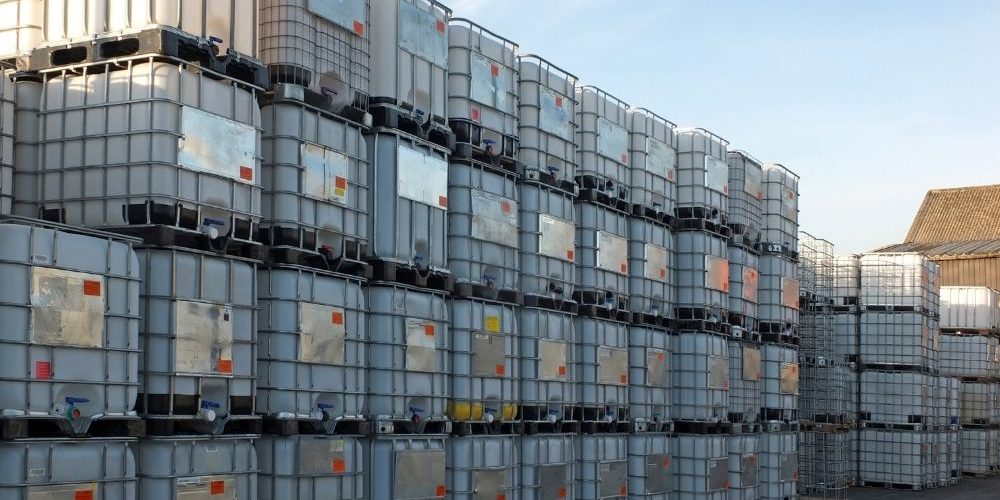
Chemical delivery preparation means having everything ready at the moment the vehicle arrives. Good offloading bulk chemicals planning covers four things.
- Equipment. For bagged goods, confirm that your forklift and pallets suit the load and the packaging. For liquids, confirm that pumps, hoses, and connection points suit the product and that the receiving tank has enough free space. For bulk methanol or any flammable liquid, make sure transfer areas are away from ignition sources and that your staff know the procedure.
- People. Only trained staff should handle offloading. They should know the SDS handling guidance, the protective equipment required, and who to call if something goes wrong.
- Access. Check that the vehicle can reach the offloading point safely and has room to maneuver. Confirm your site’s working hours, so nobody is absent when the delivery arrives. Good delivery scheduling helps your crew, equipment, and storage space be ready on the same day.
- A plan for damaged packaging. Decide in advance what happens if bags are torn or a container leaks. Keep spill materials, protective equipment, and a clear process for isolating damaged goods.
Receiving Bulk Chemicals: What to Check When a Delivery Arrives
Receiving bulk chemicals is a quality check as well as a handling task. Before you accept the cargo, work through these points:
- Seals. Confirm that container or tank seals are intact and match the shipping documents.
- Labels. Check that the product name and markings match your order.
- Lot or batch number. Compare the lot or batch number on the packaging with the COA that came with the shipment.
- Packaging condition. Look for torn bags, dents, leaks, swelling, or signs of moisture.
- Quantity. Count packages or confirm the delivered volume against the paperwork.
- Documents. Confirm you have the shipment papers, the COA, and the SDS. Our guide to COA and SDS explains what each document shows.
If you arranged a pre-shipment inspection, compare its report with what has actually arrived. If anything looks wrong, stop and record it. Photograph the problem, including labels, damage, seals, and batch numbers, and save the photos with the delivery documents. Note the date, time, and who was present. This evidence supports any later discussion with the supplier or carrier. Keep damaged goods out of general storage until someone decides how to handle them safely.
Storage Records, FIFO, and Retest Dates
Once the product is in place, records keep it in good condition. Three habits matter most.
- First in, first out (FIFO). Use the oldest stock first. Arrange storage so older lots are easy to reach, and so new lots are not placed in front of them.
- Clear labeling. Mark each storage area and container with the product name and lot or batch number, so any quality question can be traced back to its delivery and COA.
- Retest dates. Some products have a retest date, after which the material should be checked before use. Chemical shelf life storage conditions vary by product, so check SDS Section 7, the TDS, and your supplier’s guidance, and record the date.
Site Readiness Checklist
Use this list to confirm your bulk chemical storage requirements before each delivery:
- SDS Sections 7 and 10 read for each product
- Storage area clean, dry, and ready
- Segregation and secondary containment confirmed
- Handling equipment checked and trained staff assigned
- Vehicle access and working hours confirmed
- Spill and damaged-packaging plan ready
- Receiving checks printed: seals, labels, batch number, packaging, quantity
- Storage records, FIFO layout, and retest dates prepared
Frequently Asked Questions
Check the seals, the labels, the lot or batch number against the COA, the packaging condition, and the quantity. Photograph and record any problem before the goods go into storage.
Keep it sealed in original packaging, store it dry and covered on pallets, avoid tall stacks, limit swings in temperature and humidity, and use older stock first.
Yes. Solids need protection from moisture and compaction. Liquids need compatible tanks, secondary containment, and venting. Both need segregation from incompatible materials.
Start with SDS Section 7 and Section 10 for your product. You can also ask our sales team for product handling information.
Ready to Prepare for Your Shipment?
Meeting bulk chemical storage requirements is easier when you know the product’s handling needs early. If you have an order in progress, you can request product handling information from our sales team before the shipment arrives. Tell us the product, packaging format, and destination, and we will share the handling details available.