
If you import industrial or petrochemical products, you already know that the product itself is only half the deal. The paperwork that travels with it decides whether your shipment clears customs smoothly, whether your quality team can actually verify what’s in the drum, and whether your company stays compliant with local safety law. Good chemical export documentation is what separates a supplier you can build a long-term contract with from one you’ll be chasing for answers after the goods have already left port.
This guide walks through exactly what documents you should expect from any serious exporter, how to read the numbers on a Certificate of Analysis before you approve an order, why the Material Safety Data Sheet matters as much for your customs broker as it does for your warehouse staff, and what certifications actually mean when a supplier lists them for you. Whether you’re sourcing urea, caustic soda flakes, sodium bicarbonate, or specialty solvents, the compliance checklist below applies the same way.
Why Chemical Export Documentation Matters More Than Price
Procurement teams often start a supplier search by comparing price per ton. That’s understandable, but it’s the wrong first filter. A shipment that gets held at customs because a Certificate of Origin is missing, or one that fails a port inspection because the MSDS doesn’t match the actual product, costs far more than any per-ton discount is worth, in demurrage fees, delayed production lines, and damaged relationships with your own customers.
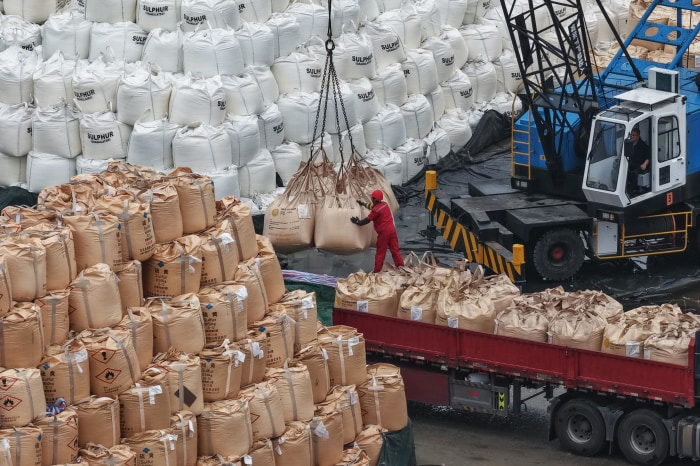
Proper chemical export documentation exists to answer three questions for everyone who touches the shipment: What exactly is in this container? Is it safe to transport and store? And is it legally allowed to cross this border? Every document in the checklist below answers at least one of those questions, and a reliable exporter should be able to produce all of them without being asked twice.
The Core Document Checklist for International Chemical Imports
Before you place an order with any chemical supplier, confirm you’ll receive each of the following. This is the standard document set that customs authorities, freight forwarders, and quality control teams expect for cross-border chemical shipments.
- Certificate of Analysis (COA): Issued by the manufacturer’s lab (ideally cross-checked by a third-party inspector), the COA lists the actual measured specifications of the batch you’re buying, purity percentage, moisture content, and other grade-specific parameters. This is the document your quality team will compare against the purchase specification before accepting the goods.
- Material Safety Data Sheet (MSDS): A standardized, multi-section document describing hazards, safe handling, storage conditions, first-aid measures, and emergency response information for the chemical. It’s required by transport carriers, port authorities, and workplace safety regulators in almost every destination country.
- Commercial Invoice: The official sales document stating the buyer, seller, product description, quantity, unit price, total value, and agreed Incoterms (FOB, CFR, CIF, etc.). Customs uses this to assess duties and taxes.
- Packing List: A detailed breakdown of how the shipment is physically packed, number of jumbo bags, drums, or containers, gross and net weight per unit, and total shipment weight. Customs and warehouse teams use this to verify the physical count matches the invoice.
- Bill of Lading (B/L): Issued by the shipping line or freight forwarder, this is both a receipt for the cargo and the legal title document needed to release the goods at the destination port.
- Certificate of Origin (CoO): Confirms the country where the goods were manufactured. Many destination countries require this for customs clearance, and it can also determine whether preferential tariff rates apply under trade agreements.
Depending on the destination market and the specific chemical, you may also need a fumigation certificate (for wooden pallets), an insurance certificate, or a specific import permit. A supplier that manufactures the product itself, rather than reselling it, is usually in a much stronger position to produce accurate, consistent documentation across all of these, simply because they control the production data at the source.
How to Read a Certificate of Analysis Correctly
A COA is only useful if your team knows what to check on it. Too many buyers glance at the purity number, see it’s within range, and move on, missing details that matter just as much for how the product will actually perform. Here’s what to check, using urea as a working example (the same logic applies to caustic soda, sodium bicarbonate, and most other bulk chemicals with grade-specific specifications):
- Purity/assay percentage: confirm it meets or exceeds the grade you ordered (for example, 46% nitrogen content minimum for standard granular urea). This should never be reported as a vague range; it should be a specific measured value for that batch.
- Biuret percentage: particularly critical for agricultural-grade urea, since high biuret content can be toxic to certain crops. Reputable specifications keep this below 1%, and the COA should state the exact figure, not just “within spec.”
- Moisture content: high moisture affects both product stability during long transit and the accuracy of the weight you’re actually paying for. It should be reported as a precise percentage, not rounded to a generic figure.
- Ash content and insoluble matter: relevant for products like sodium bicarbonate and caustic soda flakes, where ash and residue levels affect suitability for food-grade, feed-grade, or industrial-grade applications.
- Batch number and test date: every COA should be tied to a specific production batch and a recent test date, not a generic “typical values” sheet reused across shipments. If a supplier can only offer typical values instead of batch-specific results, that’s a signal to ask more questions before ordering.
- Testing method reference: established exporters note which standard method (such as ASTM or ISO test protocols) was used, which lets your own lab cross-check results using the same methodology.
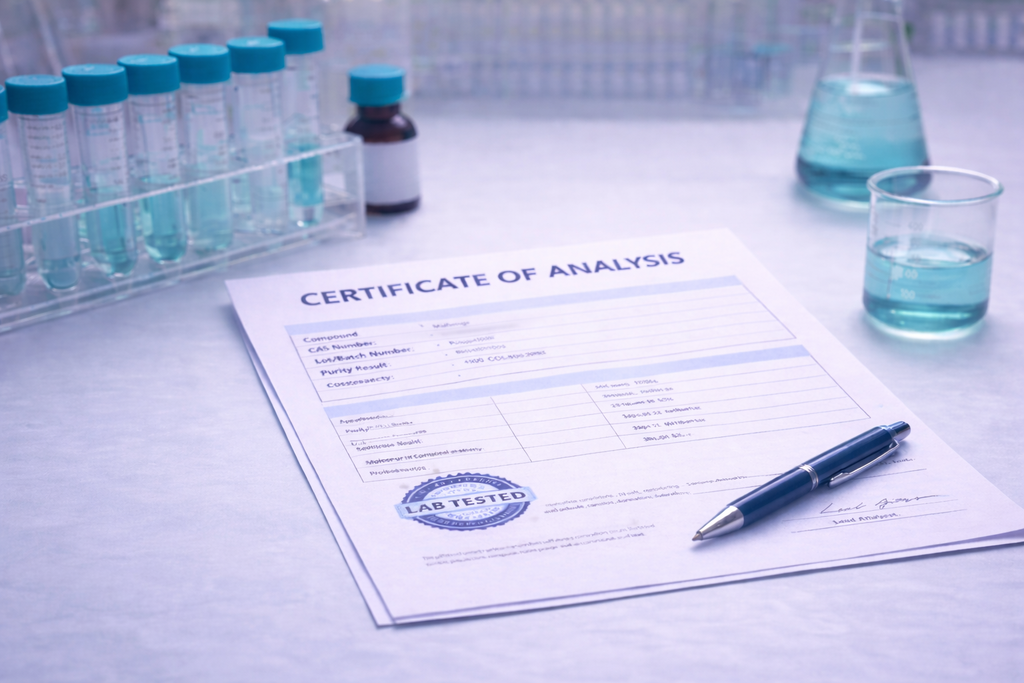
If a COA is vague, unsigned, or doesn’t correspond to a traceable batch, treat that as a red flag rather than a formality to skip past. A COA you can’t verify against the actual shipment is not much better than no COA at all. Here’s a sample Certificate of Analysis:
MSDS and GHS Compliance: Protecting People, Not Just Paperwork
The Material Safety Data Sheet often gets treated as a box to tick during procurement, but it does real work at two different points in the supply chain.
- During transport and handling, the MSDS tells freight forwarders, port workers, and warehouse staff exactly how to handle the product safely, what protective equipment is needed, what happens if there’s a spill, and what to do in case of accidental exposure. Chemicals like caustic soda flakes or sulfuric acid carry genuine handling risks, and a clear, accurate MSDS is what keeps that risk manageable rather than becoming an incident.
- At customs and in destination-country compliance systems, an MSDS aligned with the Globally Harmonized System (GHS) for hazard classification and labeling is frequently a hard requirement, not an optional nicety. Many countries’ customs and workplace-safety authorities check that hazard classifications, pictograms, and precautionary statements on the MSDS match GHS standards before goods are released or before a product can legally be distributed domestically.
A well-prepared MSDS should include hazard identification, composition details, first-aid measures, firefighting measures, handling and storage guidance, exposure controls and personal protective equipment recommendations, physical and chemical properties, stability and reactivity data, and transport information. If your supplier’s MSDS is missing several of these sections or hasn’t been updated to reflect current GHS revisions, that’s worth raising before you finalize the order; it can delay clearance in markets with stricter enforcement.
HS Code Compliance and CAS Numbers: The Identifiers That Matter
Two identifiers should appear consistently across your chemical export documentation, and mismatches between them are a common cause of customs delays.
The CAS number (Chemical Abstracts Service registry number) is a unique identifier for the specific chemical substance, independent of trade name or grade. It should match exactly across the COA, MSDS, and commercial invoice, a CAS number that doesn’t correspond to the product description is one of the fastest ways to trigger a customs hold for further inspection.
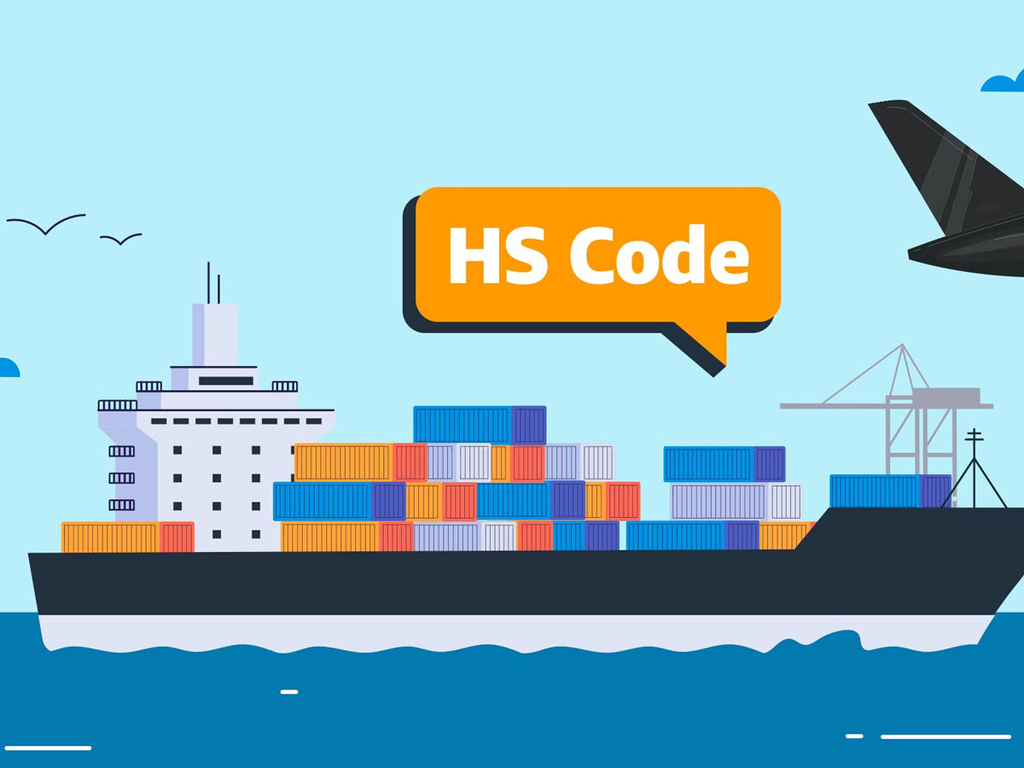
The HS code (Harmonized System code) is what customs authorities use to classify the product for tariff and regulatory purposes. HS code compliance means the code declared on your commercial invoice and shipping documents accurately reflects the product category under the destination country’s tariff schedule. Getting this wrong, even unintentionally, can result in incorrect duty assessments, shipment holds, or in more serious cases, penalties. A supplier with export experience across many countries will typically already know the correct HS code classification for each product in each major destination market, which is one more reason manufacturing history and export volume are worth asking about directly.
Manufacturer Trust Signals: Why ISO Certification and Third-Party Inspection Matter
Chemical export documentation quality tends to track closely with how seriously a company treats its manufacturing process overall. This is where third-party certification becomes a meaningful shortcut for procurement teams doing supplier due diligence.
ISO 9001 (quality management systems) indicates that a manufacturer has documented, repeatable processes for consistent product quality, which is exactly what shows up as batch-to-batch consistency on your COAs. ISO 14001 (environmental management) reflects controlled, compliant handling of production impacts, increasingly relevant as more destination markets add environmental due-diligence requirements for imported industrial goods. ISO 45001 (occupational health and safety management) demonstrates that worker safety systems are formally managed, not incidental, a signal that extends naturally into how seriously a company treats safety documentation like the MSDS.
Beyond ISO certification, independent verification from an inspection body such as SGS adds another layer of assurance: a neutral third party confirming that what’s on the COA matches what’s actually in the shipment, rather than relying solely on the manufacturer’s own lab results.
Sepehran holds ISO 9001, ISO 14001, and ISO 45001 certification across its production operations, and supports SGS inspection for buyers who want independent, third-party verification of quality before shipment. Combined with owning five manufacturing facilities rather than operating as a pure trading intermediary, this means the company controls the data behind every COA and MSDS it issues, rather than passing along documentation it can’t fully stand behind.
Want to Import Chemical Products?
Read more about the company’s manufacturing footprint
What This Means for Your Next Order
If you’re evaluating chemical suppliers for a new contract, use documentation quality as an actual screening criterion, not an afterthought you deal with after price and lead time are settled. Ask for a sample COA and MSDS before you commit to a purchase order. Check that CAS numbers and HS codes are consistent across every document. Confirm the supplier can name its certifications and, ideally, arrange third-party inspection if your internal compliance policy requires it.
A manufacturer that can produce clean, batch-specific, GHS-aligned chemical export documentation on request, without delay or vague answers, is telling you something important about how the rest of the relationship will go. That kind of consistency is exactly what buyers sourcing wholesale chemicals from established manufacturers should expect as standard, not as a premium add-on.
If you’d like to see current specifications, COA samples, or certification documents for a specific product, reach out to Sepehran’s export sales team directly. WhatsApp contact details are available on each product page, and the team can walk you through documentation for your specific destination market before you place an order.
Want to Import Chemical Products?