
Before a chemical shipment can move, someone has to answer a simple question: is it dangerous goods, and if so, what kind? The answer shapes almost everything that follows. It decides which packaging is allowed, whether a carrier will accept the booking, and what customs and port officials expect to see in your paperwork. A mistake here can mean a rejected cargo, a held container, or a fine.
This guide explains dangerous goods classification for chemicals in plain language. You will learn how a UN number, a hazard class, and a packing group fit together, see how four common export chemicals are classified, and find out where that information appears in your shipping documents. It covers classification only. Document sets and packaging choices are handled in separate guides, linked below.
How Classification Works
Dangerous goods classification for chemicals starts with the UN Model Regulations. Sea transport follows the IMDG Code, road transport in Europe and neighboring countries follows ADR, and air transport follows the IATA and ICAO rules. All of them build on the same system, so the core data looks very similar from one mode to the next. Every classified chemical carries three key identifiers:
- UN number. A four-digit code that identifies a specific substance or group of substances. It is the main reference for UN number chemical shipping, and carriers, ports, and emergency responders all use it.
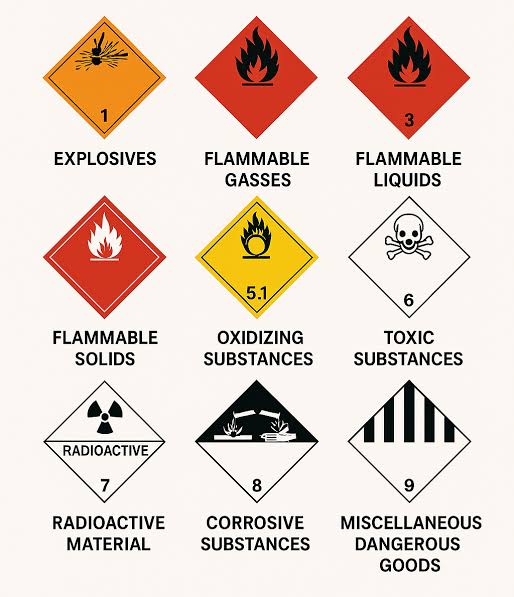
- Hazard class. A number that describes the main danger. Class 3 covers flammable liquids, Class 8 covers corrosive substances, and Class 6.1 covers toxic substances. Some chemicals also have a subsidiary hazard, shown in brackets.
- Packing group. A rating of the danger level: I for high danger, II for medium danger, and III for low danger. It tells shippers how robust the packaging must be.
Here is how these pieces look together in a real transport description, taken from the methanol entry in a published SDS:
UN 1230 METHANOL, 3 (6.1), II
- UN 1230: the UN number
- METHANOL: the proper shipping name
- 3: the primary hazard class, flammable liquid
- (6.1): the subsidiary hazard, toxic
- II: the packing group
You will see this same sequence on SDS Section 14 and on transport documents. Some IMDG descriptions add extra data after it, such as a flash point. The UN system defines nine hazard classes in total, but most bulk industrial chemicals fall into a few of them. The four chemicals in the next section sit in only two: Class 3 and Class 8. In practical terms, a flammable liquid needs protection from heat, sparks, and static, while a corrosive substance attacks skin, metals, and some packaging materials. A toxic subsidiary hazard adds exposure controls on top of that. These risks are the reason carriers ask for the classification before they accept a booking.
One point causes frequent confusion. GHS pictograms, the hazard symbols on supply labels and SDSs, come from a different system than transport labels. A drum may carry both, but one does not replace the other.
Examples for Common Export Chemicals
The table below shows how four widely traded chemicals are listed: industrial methanol, sulfuric acid, caustic soda flakes, and ethyl acetate. The values come from ADR and IMDG entries as published in dangerous goods databases, and from Section 14 of supplier SDSs. They are not recalled from memory, and they should never replace the SDS for the exact product you are buying.
| Chemical | UN number | Proper shipping name | Class (subsidiary) | Packing group | Transport label |
|---|---|---|---|---|---|
| Methanol | 1230 | METHANOL | 3 (6.1) | II | 3 + 6.1 |
| Sulfuric acid, more than 51% acid | 1830 | SULPHURIC ACID | 8 | II | 8 |
| Sulfuric acid, not more than 51% acid | 2796 | SULPHURIC ACID with not more than 51% acid | 8 | II | 8 |
| Caustic soda flakes (sodium hydroxide, solid) | 1823 | SODIUM HYDROXIDE, SOLID | 8 | II | 8 |
| Ethyl acetate | 1173 | ETHYL ACETATE | 3 | II | 3 |
Classification can vary by concentration, form and regulation. Three details in this table show why. First, concentration. Sulfuric acid splits into two UN entries at 51% acid. Both are Class 8, packing group II, but the UN number and shipping name differ, and your documents must show the right one.
Second, form. Caustic soda flakes are listed as sodium hydroxide, solid. A caustic soda solution falls under a different entry, so the form has to be stated exactly. Third, regulation. Methanol’s international entry includes the toxic subsidiary hazard, yet one published methanol SDS shows its US road entry (49 CFR) as Class 3 only, while the same SDS lists IMDG as 3 (6.1). Same chemical, different regulation, different result.
Where It Appears in Paperwork
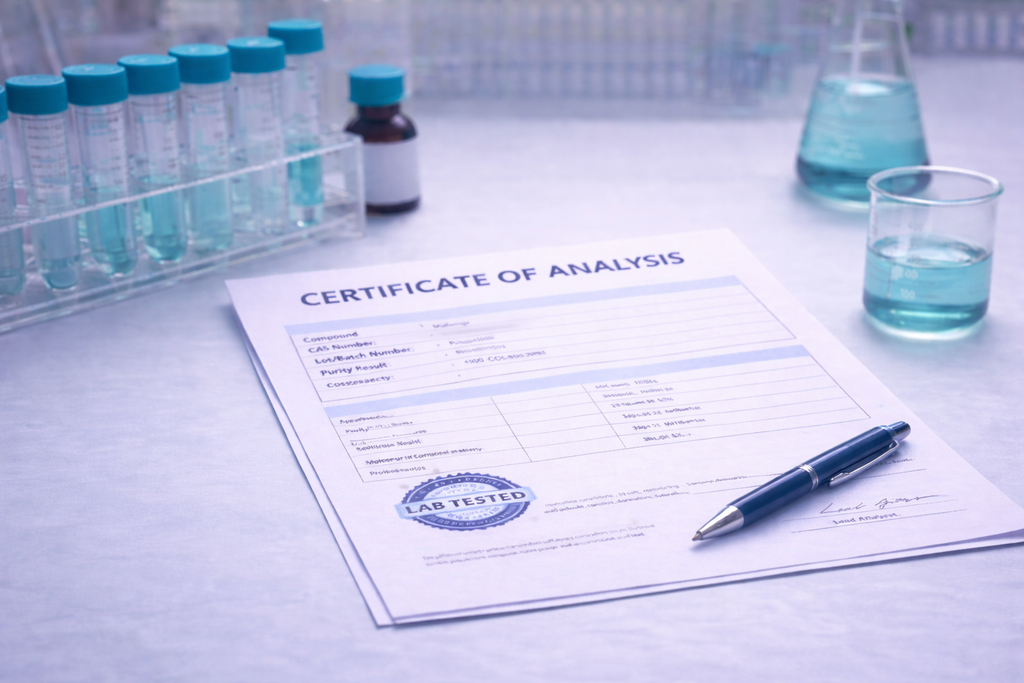
Every hazard class chemical shipment needs the same data to appear consistently in three places, from the supplier’s SDS to the final label on the package.
- SDS Section 14. This is the transport section of the Safety Data Sheet. It usually lists the UN number, proper shipping name, hazard class, packing group, and environmental hazard status, often in separate blocks for ADR, IMDG, and IATA. It is the first place to check.
- Transport documents. The dangerous goods transport document repeats the classification in the standard sequence shown earlier, and the carrier relies on it to accept and handle the cargo. For how these papers fit together with certificates and commercial documents, see our guide to SDS and COA checks.
- Labels and placards. Chemical shipping labels on each package show the hazard class, and a chemical with a subsidiary hazard needs a label for that risk too. Methanol, for example, takes both a Class 3 and a Class 6.1 label. Containers and vehicles then carry placards, or orange plates on ADR road transport, so that anyone handling them can see the hazard.
A simple example shows how this goes wrong. A buyer asks for 96% sulfuric acid, but the supplier’s SDS lists the entry for acid at not more than 51%. Because the 51% line separates two different UN numbers, that mismatch is not a typo. It means the paperwork describes a different product from the one being shipped, and a carrier or inspector can refuse it. If the SDS, the transport document, and the labels disagree, expect questions at the port.
Why Classification Needs Regular Rechecking
Transport rules do not stand still. The IMDG Code and ADR are both amended on a regular cycle, and an entry can change in small but important ways, such as new special provisions or revised wording. A classification that was correct two years ago may no longer match the current edition.
For that reason, treat dangerous goods classification for chemicals as tied to a date. Note which edition of the code your supplier used, and ask for an updated SDS when a new edition takes effect. This habit costs almost nothing and removes a common source of last-minute document corrections.
What Buyers Should Verify
Buyers do not classify the goods, but they can catch errors early. A careful supplier will welcome these checks, because accurate dangerous goods classification for chemicals protects both sides of the deal. Ask the supplier to confirm the following in writing:
- The full classification. UN number, proper shipping name, hazard class, subsidiary hazard, and packing group.
- The exact product description. Concentration, grade, and physical form should match the classification, such as solid versus solution.
- Consistency across documents. The quotation, SDS, and transport document should all show the same entry.
- The regulation that applies to your route. Sea shipments follow IMDG, road shipments follow ADR, and air shipments follow IATA. Make sure the SDS covers yours.
- The labels. Packages should carry every label the classification requires, including subsidiary hazard labels.
- The SDS revision date. Regulations are updated regularly, so an old SDS may show outdated data.
Frequently Asked Questions
No. A CAS number identifies a chemical substance. A UN number identifies a transport entry. One chemical can match more than one UN number, as sulfuric acid does at different concentrations.
Under the main transport codes, the shipper, also called the consignor, is generally responsible for classifying and declaring the goods. Buyers should still verify the data, since errors can delay their cargo.
No. GHS pictograms communicate hazards for handling and use. Transport labels follow the UN transport rules. A package may need both.
Yes. The methanol example above shows this. Always check the regulation that applies to your route and the current edition of the code.
No, it works the other way around. Packing group I is the highest danger, and III is the lowest. All four chemicals in the table above sit in packing group II, the medium level.
It sets the framework, since the packing group affects which packaging types are allowed. The actual choice of packaging is a separate decision.
Accurate dangerous goods classification for chemicals takes a few minutes to check and can prevent days of delay. Keep the classification consistent from the SDS to the final label, and confirm it against the current regulations before every shipment.