
Choosing between liquid CO2 vs cylinders comes down to how much carbon dioxide you use and how steadily you use it. Cylinders suit smaller or occasional needs. A liquid CO2 tank suits regular use at moderate volumes. Bulk supply suits large, continuous consumption where frequent cylinder changes would waste time. Your consumption rate, storage space, and delivery schedule decide which format fits. This guide compares the three formats, shows how to size your supply, and covers the safety basics. It is written for buyers who already know they need CO2 and want to decide how to buy it.
The Three Formats: Liquid CO2 vs Cylinders vs Bulk
Sepehran has bulk supply for manufacturing, food processing, welding, and other industrial uses. Suppliers sometimes use these terms in different ways, so always confirm what a quote actually includes. In this guide, the formats mean the following:
- Cylinders are portable pressure containers that you move, connect, and swap out.
- Liquid CO2 tanks are storage vessels at your site that hold CO2 as a liquid and are refilled by delivery.
- Bulk supply means large-volume deliveries for high, continuous demand.
| fators | Cylinders | Liquid CO2 tank | Bulk supply |
|---|---|---|---|
| Best for | Low or irregular use, small sites, mobile work | Steady, moderate use at one site | High, continuous use |
| Typical uses | Welding, small-scale processing, workshops | Food processing, manufacturing lines, refrigeration | Large manufacturing sites and high-volume processes |
| Main advantage | Flexible, no fixed installation | Fewer handling operations, steady supply | Fewest deliveries per unit used |
| Main trade-off | Frequent changes and handling at higher use | Needs space, installation, and safe siting | Needs large storage and planned delivery access |
| Planning focus | Storage and handling area | Tank siting and vaporizer | Delivery schedule and site access |
Cylinders
Cylinders are the simplest option. You do not need to build anything, and you can start with a small quantity. That makes them a natural fit for welding shops, small food processing operations, and sites that use CO2 now and then.
The cost of that flexibility is handling. Every cylinder must be moved, secured, connected, and replaced. As use grows, the time spent on changes grows with it, and so does the risk of running out between deliveries. A high, continuous draw from a single cylinder can also make it cold and frosty, which is one reason larger users move on to other formats.
Liquid CO2 Tanks
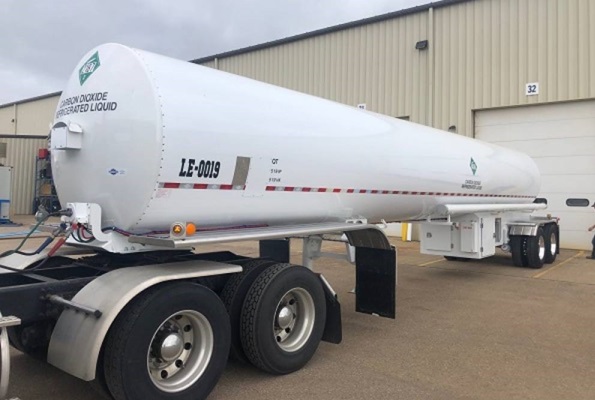
A liquid CO2 tank holds more product at a single point of use. A supplier refills it by delivery, so your staff do not swap containers. When a process needs gas rather than liquid, a vaporizer turns the liquid into gas at the rate your equipment requires.
This format suits plants with steady demand, such as production lines and refrigeration or cooling uses. It requires planning, though. The tank needs a safe, accessible location, a suitable connection, and regular delivery.
Bulk Supply
Bulk supply is built for large, continuous consumption. Deliveries arrive in large volumes and go into larger storage, so deliveries are fewer per unit consumed, and the supply is less likely to be interrupted by small container changes.
The trade-off is commitment. Bulk supply works best when your demand is predictable, your site can receive large deliveries, and you have the storage to hold them. Think of bulk CO2 supply as an infrastructure decision, not just a purchasing choice. It also helps to agree on a review point, such as every six or twelve months, so the format can change if your demand does.
CO2 Tank vs Cylinder: A Simple Rule
The CO2 tank vs cylinder question is mostly about handling time and consistency. If your team spends a lot of time changing cylinders, or if a missed change would stop production, a tank is probably worth considering. If your use is light or irregular, cylinders keep things simple.
How to Size Your Supply
Choosing well between liquid CO2 vs cylinders means putting numbers on your needs. Work through these three areas.
1. Measure Your Consumption
Start with your actual use, not an estimate. Look at the last several months and find three figures: average monthly use, peak use, and how quickly you draw CO2 when your process is running. The draw rate matters because it affects whether a cylinder can keep up and how large a vaporizer needs to be.
Also think about change. Will your use grow next year? Will a new line or customer raise demand? A format that fits today may not fit in twelve months, so ask how easily you can move from one format to another.
2. Check Your Storage
Next, look at your site. Cylinders need a secure, ventilated storage area where full and empty ones can be kept separate. A tank needs a suitable outdoor or well-ventilated location, access for delivery vehicles, and space around it. Bulk storage needs more room and clearer access still.
Ask who is responsible for the tank, the vaporizer, and the connections, and what the site requirements are. Any of these can affect cost, timing, and safety, so settle them before you commit.
3. Plan Your Deliveries
Finally, think about how often CO2 will arrive. Delivery frequency should match your consumption rate and your storage size. The goal is to keep a safe buffer so a late delivery does not stop production, without storing more than your site can handle.
Ask the supplier how orders are scheduled, what happens if you need an extra delivery, and how far ahead they need notice. For overseas orders, plan extra buffer, because international shipments take longer to arrange than local ones.
Here is how the logic works in practice. A workshop that welds a few days a week will probably use little CO2, with long gaps between uses, so cylinders fit well. A plant that runs a production line every shift uses CO2 constantly, so a tank or bulk supply avoids stops for container changes. The same process, run at different scales, can call for different formats.
What to Ask the Supplier
Once you have narrowed down a format, a few questions help you compare offers. Sepehran describes industrial carbon dioxide for manufacturing, food processing, welding, and industrial applications, with flexible shipping options. Whatever supplier you consider, check the following.
- Documents. Ask for the COA, which reports test results for a specific batch, and the TDS, which describes the product. Compare both with your own requirement. If your application has quality needs of its own, such as in food processing, state them in your inquiry and ask the supplier to confirm what the documents show. If you are importing, our guide to chemical export documentation explains how these papers fit with the rest of the shipment.
- Format and packaging. Confirm exactly what is offered: cylinders, liquid tanks, bulk supply, or customized packaging according to your requirements. Also ask whether the equipment needed for your format is part of the offer or something you provide.
- Delivery terms. Ask which terms apply and where responsibility passes to you.
- Continuity. If you need regular supply, ask how the supplier handles repeat orders. Industrial carbon dioxide supply is easiest to compare when every quote states the same volume, format, and destination.
When you are ready, companies that supply industrial carbon dioxide can quote against your volume, format, and destination.
Safety and Handling Basics
CO2 is not flammable, and it is classified as a non-toxic liquefied gas. That does not make it harmless. In large enough concentrations, it is an asphyxiant, which means it can displace oxygen and cause dizziness, unconsciousness, or worse. Because you cannot see or smell the gas at harmful levels, you may get no warning. A few basic facts guide safe handling:
- CO2 is heavier than air. It collects in low areas such as pits, trenches, and basements. Ventilation should draw from low levels, and CO2 should never be vented into enclosed or poorly ventilated spaces.
- Cold burns are possible. When liquid CO2 is released, it turns partly into very cold solid CO2 and gas. Contact with eyes or skin can cause severe frostbite, so protective equipment matters.
- Pressure is real. CO2 is stored and moved under pressure. Cylinders should be secured upright, kept away from heat sources, and handled with care.
- Trapped liquid is dangerous. Pipework where liquid CO2 can be trapped needs proper relief devices, because the pressure can rise sharply as the liquid warms.
- Monitoring helps. In areas where CO2 could build up, a gas monitor gives early warning.
Train everyone who works near CO2 supplies, and follow the safety data sheet and local regulations. For how carbon dioxide and other chemicals are classified and labeled in transport, see our overview of dangerous goods basics.
Frequently Asked Questions
Neither is better in every case. Cylinders suit light or irregular use, while liquid tanks suit steady, higher use. Your consumption rate, storage space, and delivery access decide.
Consider it when cylinder changes take up significant time, when a missed change would disrupt production, or when your consumption has grown steadily. Compare your usage history with the supplier’s tank options.
A vaporizer converts liquid CO2 into gas. You need one when your process uses gas but your supply is stored as a liquid. Size it to the rate at which your equipment draws gas.
A liquid tank is an on-site vessel refilled by delivery, usually for steady moderate use. Bulk supply refers to large-volume deliveries for high, continuous demand. Confirm how your supplier uses the terms.
Ask for the COA and TDS, plus the safety data sheet. Compare them with your own requirement before you order.
It is not flammable, but it can cause asphyxiation in enclosed or poorly ventilated areas and cold burns when released as a liquid. Follow the safety data sheet and good ventilation practice.
Choose the Format That Fits Your Use
The decision between liquid CO2 vs cylinders is not about which format is more advanced. It is about matching your consumption, storage, and delivery needs. Measure your use, check your site, and confirm exactly what each quote includes. Ready to compare formats for your operation? Request a Bulk Supply Quote and tell us your application, expected monthly use, preferred format, and destination.