
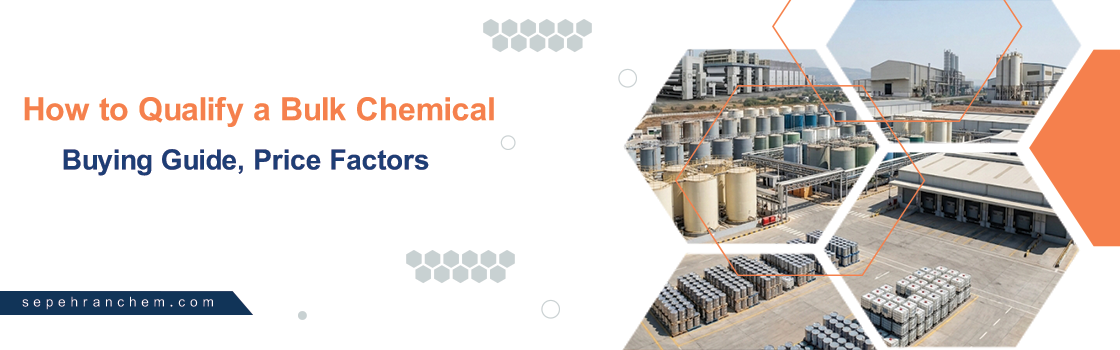
You have decided to buy bulk chemicals. The harder question is who to buy them from. A supplier that looks fine on a website can still deliver off-spec product, miss a shipping window, or disappear after the first order. In bulk trade, one bad shipment can mean thousands of dollars in losses and weeks of lost production. That is why bulk chemical supplier qualification matters. This guide gives you a practical, step-by-step framework to use before your first purchase order. It works for any chemical, any region, and any order size. By the end, you will have a simple checklist to score suppliers and decide who is safe enough to order from.
What Does Bulk Chemical Supplier Qualification Mean?
Bulk chemical supplier qualification is the process of checking whether a company can consistently deliver the right product, on time, with the right paperwork. It goes beyond comparing quotes. Think of it as chemical supplier due diligence: you collect evidence, ask direct questions, and confirm the answers before you commit money.
A good process answers four questions. Can this supplier make or source the product you need? Can they prove its quality? Can they ship it reliably to your location? And will they still perform on the tenth order, not just the first? Qualification is also not a one-time event. It is the first stage of ongoing chemical procurement risk management, and it gives you a baseline to measure the supplier against later.
1. Check the Supplier’s Business and Production Background
Start with basic supplier verification. Confirm that the company is legally registered, has a physical address, and has a track record you can check. Ask for a company profile, registration details, and references from buyers in your region. Then look at production. Ask where the product is made, how many plants the supplier operates, and what their annual production capacity is. A supplier that cannot give you these numbers quickly may not control its supply. If possible, request photos, a video walkthrough, or a virtual audit of the facility.
You do not need to decide whether the supplier is a manufacturer or a trader. Both can be legitimate. What matters is that the supplier is transparent about where the product comes from and can show that supply is stable.
2. Verify Product Specifications and Grades
Never rely on a product name alone. “Caustic soda” or “sodium bicarbonate” can mean very different things depending on purity and grade. Ask for a written specification sheet that lists purity, moisture, impurity limits, particle size, and grade, such as industrial, food, or feed. Compare that sheet with your requirements line by line. If your process needs 99% purity and the supplier offers “around 98 to 99,” ask which one you will actually receive.
Check how the specification is controlled, too. Does the supplier guarantee a range, or only a typical value? Guaranteed limits matter more than marketing averages. The details also change by product. If you buy urea fertilizer, nitrogen content and biuret levels affect crop results. If you buy caustic soda flakes for detergents or textiles, concentration and sodium carbonate content affect your process. Know which numbers matter for your use before you ask.
3. Check Quality-Control and Batch Documentation
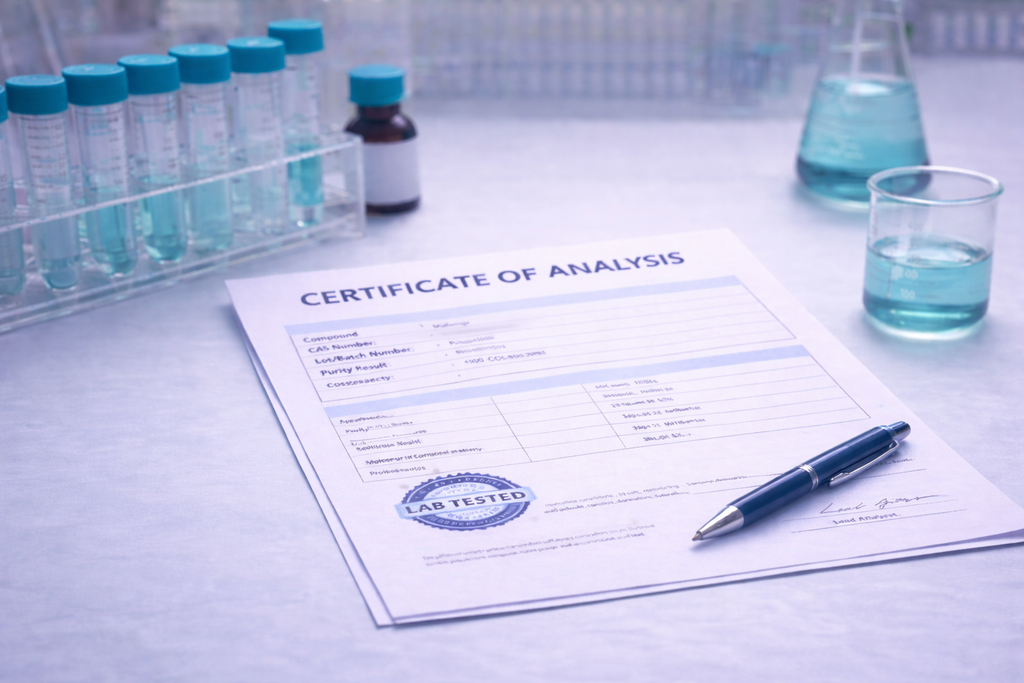
A supplier’s quality control system matters more than any single test result. Ask how they test products, how often, and who does the testing. A reliable chemical supplier will have an in-house laboratory or work with an accredited lab. Request a sample Certificate of Analysis (COA) and a Safety Data Sheet (SDS, also called MSDS). The COA should show actual test results for a specific batch, not generic numbers. The SDS should be current and match the product you are buying.
Then ask about batch traceability. If a problem appears after delivery, can the supplier link your shipment to a production batch and its test records? Suppliers who answer this clearly tend to deliver stronger quality consistency, which is why this step carries so much weight in bulk chemical supplier qualification. Look for signs of a working system, such as ISO certifications, retained samples, and a clear complaint process. For a full breakdown of the paperwork required at each stage of a shipment, see our guide to chemical export documentation.
4. Review Packaging and MOQ
Packaging affects safety, cost, and product condition on arrival. Ask what formats the supplier offers, such as 25 kg or 50 kg bags, jumbo bags, drums, or bulk loading. Confirm that the packaging material suits the chemical, since some products absorb moisture or react with certain materials.
Next, check the minimum order quantity (MOQ). A high MOQ may not fit your storage space or cash flow. A very low MOQ on a bulk product can be a warning sign that the supplier is a small reseller rather than a true bulk chemical supplier. Ask whether the MOQ changes by product, destination, or shipping method. Also ask about labeling. Labels should include the product name, grade, batch number, net weight, and hazard information. Poor labeling can cause customs delays and safety problems at your warehouse.
5. Confirm Export Experience
Export is a skill of its own. A supplier may produce excellent chemicals yet struggle with customs, hazard classification, or shipping coordination. Ask which countries they ship to, how often, and through which routes. Request references from buyers in your market. Regional knowledge matters. A supplier with experience in chemical exports to the Middle East understands port procedures that differ from those facing buyers in Central Asia, where rail and road corridors are common. Ask how the supplier handles border crossings, transit times, and delays in your region. Pay attention to how they describe past problems. Every exporter has had a late shipment. The good ones explain what happened and what they changed afterward.
6. Evaluate Lead Times and Supply Capacity
A great price means little if the shipment arrives late. Ask for realistic lead times: how long from order confirmation to loading, and then from loading to delivery. Ask what could extend them, such as seasonal demand, plant maintenance, or port congestion. For transit planning, see our guide to shipping routes and logistics.
Then test supply continuity. Ask about monthly production volume, stock on hand, and how much of that is already committed. A supplier producing 1,000 tons per month cannot reliably promise 5,000 tons next week. If you expect recurring orders, ask how the supplier would handle a demand spike or a plant shutdown. Do they have backup production or reserve stock? A dependable supplier plans for disruptions before they happen.
7. Check Incoterms and Quotation Terms
A clear quotation prevents disputes later. Check that it states the product, grade, quantity, packaging, price basis, payment terms, and delivery window. Then look closely at the Incoterms. Under FOB (Free on Board), the supplier loads the goods onto the vessel, and you take over cost and risk from there. Under CFR (Cost and Freight), the supplier pays for ocean freight to your destination port, but risk still transfers at loading. Under CIF (Cost, Insurance and Freight), the supplier also arranges minimum insurance coverage.
Each term shifts responsibility, so choose the one that matches your own logistics capability. Also ask how long the quotation stays valid and what happens if raw material costs move. Vague terms usually favor the seller.
8. Consider Third-Party Inspection
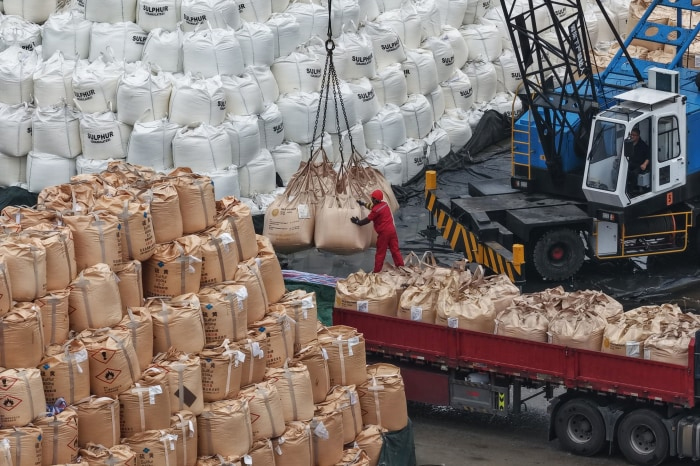
For a first order, an independent check adds a valuable layer of protection. Third-party inspection companies can verify quantity, sample the product, inspect packaging, and confirm container loading before departure. They can also test samples at an independent laboratory and compare the results with the supplier’s COA.
You do not need to inspect every shipment forever. Many buyers use inspection on the first order, then switch to periodic checks once the supplier proves consistent. Ask the supplier upfront whether they accept inspection. A confident supplier will say yes. Resistance is a red flag.
9. Test Communication Before Placing the Order
How a supplier communicates before the sale predicts how they will behave after it. Send a detailed inquiry and watch what happens. Do they respond promptly? Do they answer your technical questions, or send a generic price list? Do they ask about your application, destination, and volume?
Use the channel your team prefers. Many buyers in the Middle East, Central Asia, and South Asia work through WhatsApp, which is fine as long as key terms are also confirmed in writing by email. If the order allows it, ask for a small sample or a trial shipment. It tests the product and the supplier’s follow-through at the same time.
10. Build a Supplier Qualification Checklist
Turn the steps above into a simple scoring sheet. This makes your bulk chemical supplier qualification consistent from one supplier to the next. Rate each item as pass, partial, or fail, and require a pass on all critical items before you order.
Chemical supplier checklist:
- Company registration, address, and buyer references verified
- Production sites and annual capacity confirmed
- Written specification with purity and grade guarantees
- Sample COA and current SDS received
- Batch traceability and testing process explained
- Packaging options and labeling confirmed
- MOQ fits your needs
- Export experience in your region confirmed
- Realistic lead time and stock availability stated
- Quotation with clear Incoterms (FOB, CFR, or CIF)
- Third-party inspection accepted
- Responsive, specific communication
If a supplier fails a critical item, such as missing documents or refusing inspection, stop there. If the results are partial, ask follow-up questions before you decide. Keep the completed sheet on file so you can compare suppliers fairly and review them again later.
11. When Is a Supplier Ready for a Long-Term Contract?
A supplier is ready for a long-term agreement after they have proven themselves, not after a good sales call. Look for these signs after the first few shipments: batches matched the COA, deliveries arrived within the agreed window, documents were accurate, and problems were solved quickly.
A sensible path is a trial order, then repeat orders, then a framework or annual contract. Include specification limits, delivery schedules, quality claim procedures, and volume flexibility. This structure protects both sides and supports long-term supply continuity. Bulk chemical supplier qualification does not end when the contract is signed. Keep reviewing performance by tracking on-time delivery, quality results, and responsiveness. Strong supplier relationships are built on consistent results, not promises.
Take the Next Step
Bulk chemical supplier qualification takes some effort upfront, but it costs far less than fixing a failed shipment. If you are comparing suppliers now, use this framework to test every one of them, including us. Ready to put Sepehran Chemistry through the same checklist? Request a Bulk Supply Quote and tell us your product, grade, quantity, and destination. We will respond with specifications, documents, packaging options, and Incoterms.