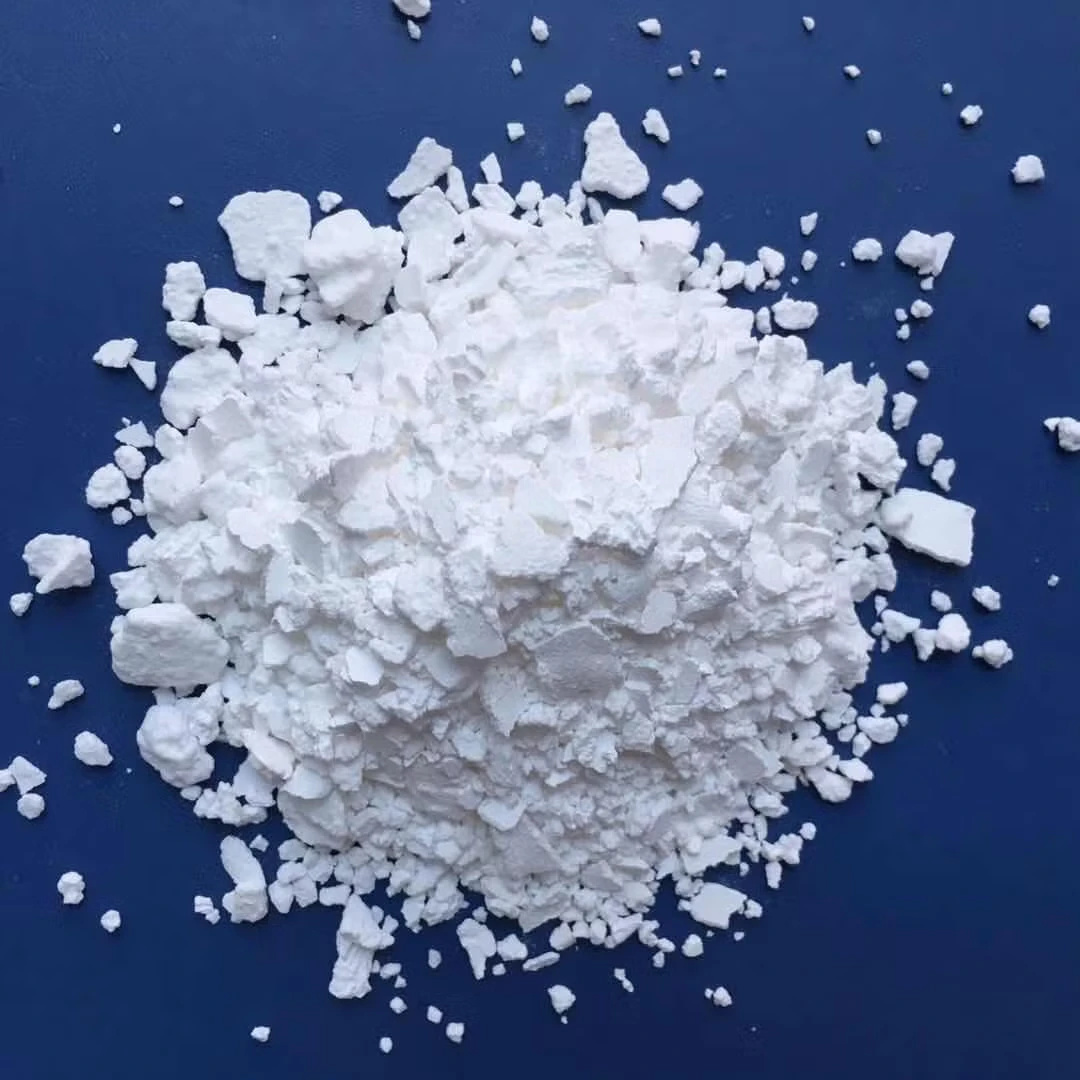
Sepehran Chemistry exports industrial calcium chloride, CaCl2 (CAS 10043-52-4, HS code 2827.20), from Iran for oil and gas drilling and completion fluids, de-icing, dust control, chemical manufacturing and water treatment. We ship in PP woven bags, jumbo bags, drums or customized export packaging, under FOB, CFR or CIF terms. COA, technical data sheet and export documentation are available on request.
Calcium chloride is an inorganic salt of one calcium ion and two chloride ions. It is strongly hygroscopic: it pulls moisture from the air and dissolves in it, and it releases heat when it dissolves in water. These properties make it a de-icer, a dust suppressant, a desiccant and a source of dense, solids-free brine for oil wells.
Sepehran Chemistry works as a supplier and exporter for drilling-fluid companies, road authorities and contractors, chemical plants and distributors. We pack in moisture-resistant packaging, quote on FOB, CFR or CIF terms, and handle export documents and logistics. Calcium chloride is part of our range of wholesale chemicals from Iran.
Calcium Chloride Product Information
Lot-specific values are given on the Certificate of Analysis, available on request.
| Property |
Value |
| Chemical name |
Calcium chloride |
| Synonyms |
CaCl2, calcium dichloride |
| CAS No. |
10043-52-4 (anhydrous); 10035-04-8 (dihydrate) |
| EC No. |
233-140-8 |
| HS code |
2827.20 |
| Molecular formula |
CaCl2 (dihydrate: CaCl2·2H2O) |
| Molecular weight |
110.98 g/mol (anhydrous); 147.01 g/mol (dihydrate) |
| Structure |
Ionic salt of one Ca2+ ion and two Cl− ions |
| Appearance |
White flakes, granules, prills or powder; strongly hygroscopic |
| Melting point |
Approx. 772 °C (anhydrous) |
| Solubility in water |
Very soluble; dissolving releases heat |
| Grade |
Industrial grade |
Packaging, Delivery Terms and Documents
- PP woven bags: For palletized or container shipments.
- Jumbo bags: For bulk users with handling equipment.
- Drums and customized packaging: Export packaging made to the buyer's requirements.
- Order volume: Wholesale and bulk quantities for international buyers.
- Delivery terms: FOB, CFR and CIF.
- Documents: COA (Certificate of Analysis), technical data sheet and export documentation, available on request.
Request a Bulk Supply Quote
Main Applications of Calcium Chloride
- Oil and gas drilling and completion: Calcium chloride brine is a clear, solids-free completion and workover fluid with a density of up to about 1.39 g/cm³ (11.6 ppg). It is also dissolved in the water phase of oil-based drilling muds to control shale swelling.
- De-icing: It melts ice on roads, runways and walkways at lower temperatures than rock salt, and it releases heat as it dissolves, so it starts working quickly.
- Dust control and road stabilization: On unpaved roads, mine haul roads and construction sites, it draws moisture from the air and keeps the surface damp, which holds dust down and binds the road base.
- Concrete: It accelerates the setting of plain (non-reinforced) concrete, especially in cold weather.
- Chemical manufacturing and drying: It is a soluble calcium source in chemical processes and a desiccant for drying gases and liquids.
- Water treatment and refrigeration: It raises calcium hardness in water systems and is used as a low-freezing brine in refrigeration and cooling circuits.
Calcium Chloride Flakes vs Anhydrous vs Liquid
- Flakes (dihydrate): Usually sold at 74% to 77% CaCl2. The most common form for de-icing, dust control and general industrial use.
- Anhydrous granules, prills or powder: Usually 94% CaCl2 or more. More calcium chloride per ton and a stronger drying effect, so they suit drilling fluids, desiccants and long-distance freight.
- Liquid brine: Usually a 30% to 40% solution. Easy to spray or pump, but most of the shipped weight is water, so it is mainly used close to where it is made.
- Calcium chloride vs rock salt: Rock salt (sodium chloride) costs less but stops working well in hard frost. Calcium chloride keeps melting ice at much lower temperatures.
What Affects the Price of Calcium Chloride
- Form and concentration: Anhydrous calcium chloride needs more drying energy and costs more per ton than flakes.
- Raw material and energy: Calcium chloride comes from natural brines or as a by-product of soda ash production. Energy for evaporation and drying is a major cost.
- Seasonal demand: De-icing demand peaks before winter, and dust-control demand rises in dry seasons.
- Drilling activity: Oil and gas drilling and completion work drives demand for anhydrous grades.
- Packaging: PP bags, jumbo bags and drums each have different packing costs per ton.
- Delivery term and quantity: CFR and CIF prices include sea freight, and CIF also includes insurance. Larger and repeat orders usually get better unit prices.
Frequently Asked Questions
What are the CAS number and HS code of calcium chloride?
Anhydrous calcium chloride has CAS number 10043-52-4, and the dihydrate has 10035-04-8. Both are classified under HS code 2827.20.
What is the difference between 74% and 94% calcium chloride?
74% calcium chloride is the dihydrate, usually sold as flakes, and contains crystal water. 94% calcium chloride is anhydrous, with almost no water, so it delivers more CaCl2 per ton and absorbs more moisture.
How is calcium chloride packed for export?
We supply calcium chloride in PP woven bags, jumbo bags, drums or customized export packaging made to the buyer's requirements.
How should calcium chloride be stored?
Keep the bags sealed in a dry, covered place. Calcium chloride absorbs moisture from the air, so open or damaged bags will cake and can turn to liquid.
Can calcium chloride be used in reinforced concrete?
It is not recommended. Calcium chloride speeds up concrete setting, but its chloride ions can corrode steel reinforcement. It is mainly used in plain, non-reinforced concrete.
Which delivery terms and documents are available?
We quote calcium chloride on FOB, CFR and CIF terms. A COA (Certificate of Analysis), technical data sheet and export documentation are available on request.
Request a Calcium Chloride Export Quote
To get a quote, send us the quantity you need, the form and concentration (flakes or anhydrous), the end use, your preferred packaging, the destination port and the delivery term (FOB, CFR or CIF). Our export team will reply with a quotation and the documents available for your order. You can also reach us through the contact page.
Chat with Our Export Team