

Glycols are a chemical family where a small labeling mistake causes a real production problem. Monoethylene glycol (MEG), diethylene glycol (DEG), triethylene glycol (TEG), and monopropylene glycol (MPG) all look similar on a spec sheet: clear, viscous, hygroscopic liquids, but they serve completely different industries, and substituting one for another is rarely a safe shortcut. A polyester fiber plant needs MEG. A gas processing facility needs TEG. Mixing that up isn’t a paperwork error; it’s a batch of failed product or a dehydration unit that doesn’t perform. This industrial glycols application guide is built for procurement and technical teams who need to understand exactly which glycol grade fits which use case, and what to check before placing a bulk order. We’ll walk through the chemistry that matters for buying decisions, the primary application for each glycol type, and the handling and shipping details that affect landed cost and product quality.
What Makes Glycols Different From Each Other
All four glycols in this guide are used, in various ways, because of one shared property: they’re hygroscopic, meaning they readily absorb and hold onto water. That single characteristic is what makes TEG useful for pulling moisture out of natural gas, and it’s also exactly why all four products need to be stored and shipped in sealed, moisture-controlled conditions; more on that later.
Beyond that shared trait, the differences come down to molecular size, viscosity, and boiling point, which is why the right starting point for any industrial glycols application decision is a side-by-side comparison.
Comparison: MEG vs. DEG vs. TEG vs. MPG
| Property | MEG (Monoethylene Glycol) | DEG (Diethylene Glycol) | TEG (Triethylene Glycol) | MPG (Monopropylene Glycol) |
|---|---|---|---|---|
| Chemical formula | C₂H₆O₂ | C₄H₁₀O₃ | C₆H₁₄O₄ | C₃H₈O₂ |
| Molecular weight | ~62.07 g/mol | ~106.12 g/mol | ~150.17 g/mol | ~76.09 g/mol |
| Boiling point | ~197°C | ~245°C | ~285°C | ~188°C |
| Viscosity | Low | Medium | Medium-high | Low-medium |
| Hygroscopic strength | High | High | Very high | Moderate |
| Primary industry | Textiles / PET resin / polyester fiber | Unsaturated polyester resins / plasticizers / solvents | Natural gas dehydration / oil & gas | Food, pharma, and unsaturated resin applications |
| Typical grade terms | Fiber grade, industrial grade | Industrial grade | Gas dehydration grade | USP/food grade, industrial grade |
| Common packaging | ISO tank, drums | Drums, ISO tank | Drums (most common), ISO tank for large volumes | Drums, IBC totes |
This table is the fastest way to confirm you’re specifying the right product for your industrial glycols application before you even get to a supplier’s quotation. Molecular weight and boiling point aren’t just academic details; they directly determine whether a glycol will actually do the job in your process.
MEG: The Backbone of Polyester and PET Production
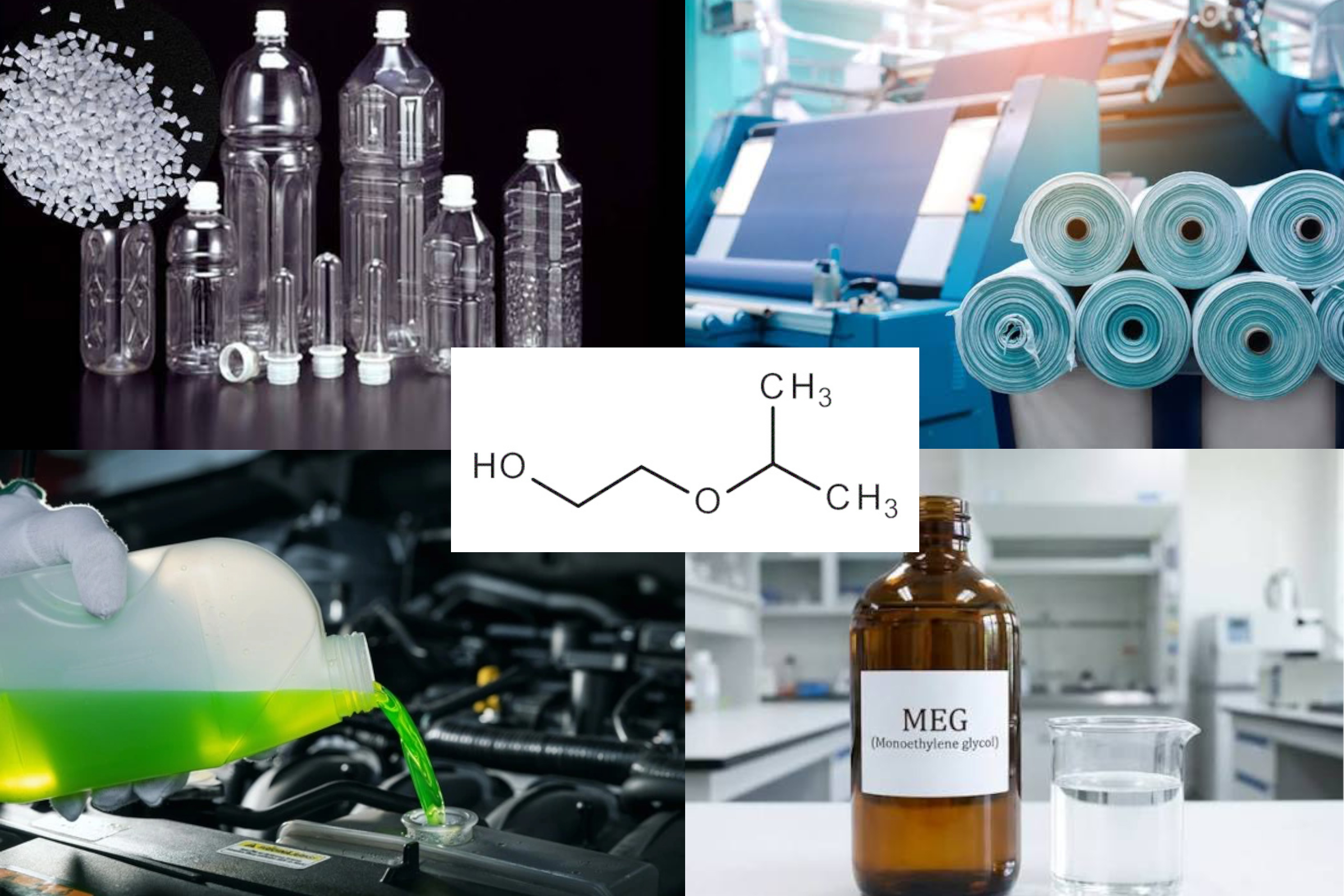
Monoethylene glycol is, by volume, the most widely traded glycol globally, and its dominant use case is polyester. MEG reacts with purified terephthalic acid (PTA) to produce PET resin, the raw material behind polyester fiber for textiles and PET bottle-grade resin for packaging. If you’re sourcing for a fiber spinning line or a PET resin plant, MEG fiber-grade purity (typically 99.8%+) is the specification to confirm, along with low diethylene glycol content as an impurity, since even small amounts of DEG carried over into the MEG feedstock affect fiber and resin quality.
MEG also shows up in industrial antifreeze formulations and heat-transfer fluids, thanks to its low freezing point when blended with water, though this is a smaller share of global demand compared to the textile and packaging sector.
Are you in the polyester and PET value chain?
Sepehran’s Monoethylene Glycol (MEG) has current specification sheets and packaging options for both fiber-grade and industrial-grade orders.
DEG: The Overlooked Workhorse in Resins and Solvents
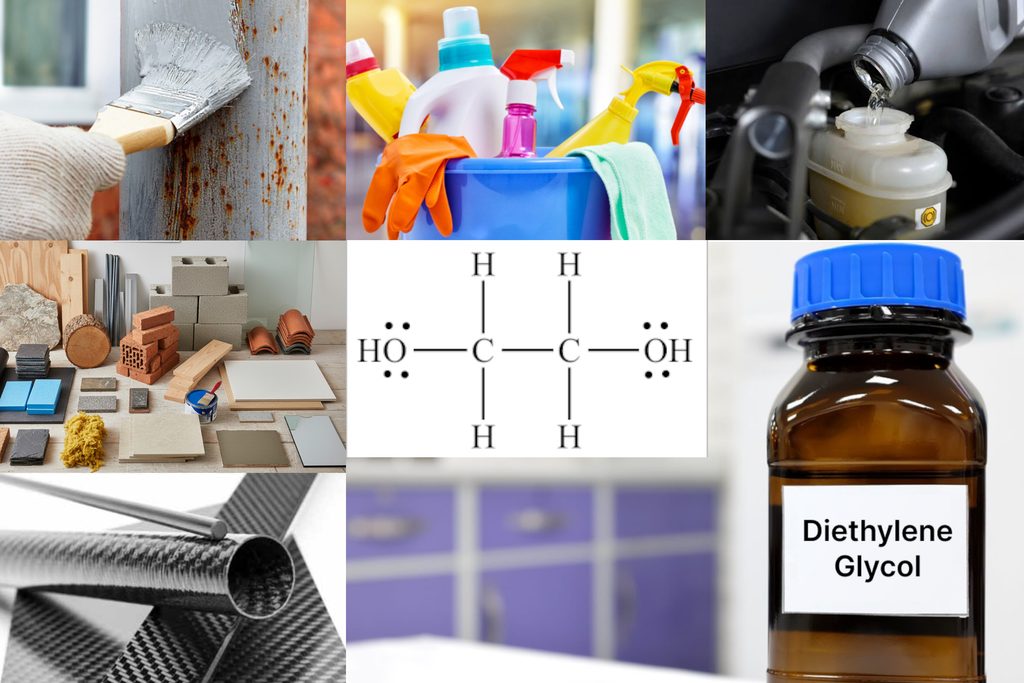
Diethylene glycol is technically a co-product of MEG production, but it has its own dedicated demand, mostly in unsaturated polyester resins used for fiberglass composites, coatings, and construction materials. DEG acts as a glycol component in the resin’s polymer backbone, and it’s also used as a plasticizer and solvent in industrial cleaning formulations, printing inks, and some brake fluid blends.
Because DEG has a higher boiling point and higher viscosity than MEG, it behaves differently in polymerization reactions, which is exactly why resin manufacturers specify it by name rather than accepting “any glycol” from a supplier. If your process calls for DEG specifically, confirm purity and moisture content on the Certificate of Analysis before shipment, the same way you would for any other bulk chemical (our guide on chemical export documentation covers exactly what to check).
Are You Looking for a Trusted Supplier and Manufacturer?
You can order Diethylene Glycol (DEG) straight from Sepehran’s factories. Check our current DEG specifications and packaging options.
TEG: The Standard for Natural Gas Dehydration
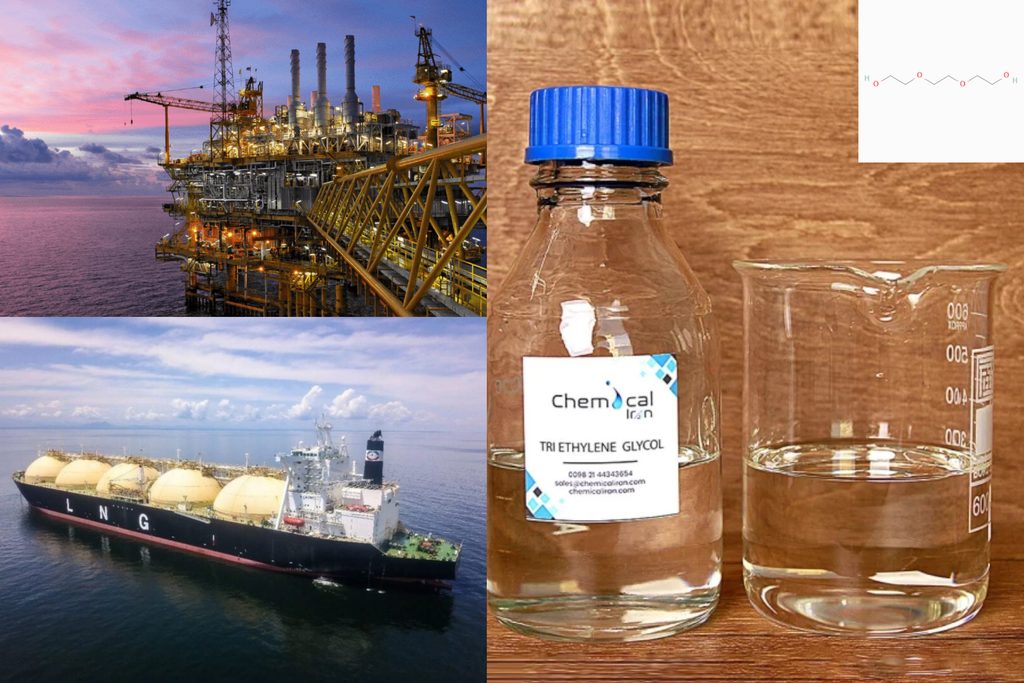
Triethylene glycol is the single most important glycol in the oil and gas sector. For buyers in gas-producing regions, it deserves its own conversation separate from the other three. Natural gas coming out of the ground carries water vapor, and that moisture has to be removed before the gas can be safely transported through pipelines or processed further; untreated moisture causes hydrate formation, pipeline corrosion, and equipment damage. TEG is the industry-standard solvent for this gas dehydration process because of its very high hygroscopic capacity, high boiling point (which lets it be regenerated and reused through repeated heating cycles), and relatively low cost compared to alternative dehydration methods.
This ties TEG demand closely to upstream gas production activity. Markets with large and expanding gas processing infrastructure, Oman’s LNG and gas export operations, and Russia’s ongoing gas field development represent some of the most consistent, high-volume TEG demand in the regions Sepehran currently serves. A reliable triethylene glycol TEG supplier for Oman operators can depend on, or one serving Russian gas fields, needs to offer not just the right purity grade, but dependable delivery volumes and lead times that match field operation schedules, since a dehydration unit running short on TEG is a genuine operational risk, not just an inconvenience.
Buyers evaluating an MEG, DEG, and TEG supplier for gas processing contracts should ask specifically about TEG purity (gas dehydration grade typically requires 99%+ purity with tightly controlled water content), packaging format for field logistics, and consistent supply capacity, all of which should be confirmed before signing a long-term offtake agreement.
Are You Looking for a Trusted Supplier and Manufacturer for TEG?
You can review current specifications for Sepehran’s Triethylene Glycol, including packaging options suited to both drum-based field delivery and larger ISO tank shipments.
MPG: Food-Grade, Pharmaceutical, and Resin Applications

Monopropylene glycol occupies a different niche from the other three. Because MPG has a substantially better safety and toxicity profile than ethylene glycol-based products, it’s the glycol of choice anywhere the end product might come into contact with food, pharmaceuticals, or personal care formulations, food-grade MPG is used as a humectant and solvent in food processing, as a carrier in some pharmaceutical formulations, and as a base ingredient in propylene-glycol antifreeze formulations marketed as lower-toxicity alternatives to ethylene glycol antifreeze.
MPG also has an industrial side: it’s used in unsaturated polyester resin production, similar to DEG, where it contributes different flexibility and chemical-resistance properties to the finished resin compared to a DEG- or MEG-based formulation. Buyers sourcing MPG should confirm early on whether they need USP/food-grade certification or standard industrial grade, since the two carry different documentation requirements and price points.
Are You Looking for a Trusted Supplier and Manufacturer for MPG?
Specification sheets and grade options for both food-grade and industrial-grade Sepehran’s Monopropylene Glycol (MPG) are available.
Choosing the Right Glycol for Your Industrial Glycols Application
If you’re not entirely sure which glycol your process actually calls for, a few quick questions usually settle it:
- Are you producing polyester fiber, PET resin, or an antifreeze/heat-transfer fluid? You almost certainly need MEG.
- Are you formulating unsaturated polyester resin, a plasticizer, or an industrial solvent, and MEG isn’t giving you the right reaction behavior or viscosity? DEG is very likely the correct substitute or complementary input.
- Are you dehydrating natural gas or operating in oil and gas processing? TEG is the standard choice, and substituting a lower-grade glycol here is a false economy; it will regenerate poorly and degrade faster.
- Does your end product touch food, pharmaceuticals, or personal care, or do you need a lower-toxicity antifreeze formulation? MPG is the appropriate choice, provided you also confirm the grade certification you need.
Every industrial glycols application ultimately comes down to matching molecular behavior to process requirements, so when in doubt, share your target application and finished-product requirements directly with your supplier’s technical team rather than ordering by name alone; grade and purity requirements often vary by end market, even within the same glycol type.
Handling & Storage: Getting Bulk Liquid Logistics Right
Because all four glycols are hygroscopic, moisture control is the central concern for any industrial glycols application involving storage and transport. Exposure to open air lets these products absorb ambient humidity over time, which can shift purity specifications and cause quality issues in sensitive applications like fiber-grade MEG or food-grade MPG. In practice, that means:
- Sealed containers only. Drums should be tightly bunged and stored upright, away from direct sun and temperature extremes that can cause expansion and seal failure. ISO tanks should have verified, intact seals and gaskets before loading.
- Temperature-controlled storage where possible. While glycols are generally stable at normal ambient temperatures, prolonged exposure to high heat can accelerate degradation and discoloration, particularly for TEG held for extended regeneration cycles.
- Material compatibility. Glycols are mildly corrosive to some metals over long exposure; carbon steel drums and tanks should be lined or coated appropriately, and stainless steel is preferred for extended storage infrastructure.
Drum vs. ISO tank
| Factor | Drums (200L steel or plastic) | ISO Tank |
|---|---|---|
| Best for | Smaller orders, field/remote delivery, multiple drop-off points | Large-volume orders (typically 20+ tons), single-destination bulk delivery |
| Handling flexibility | High, easy to move, store, and distribute in stages | Lower, requires tank-handling infrastructure at destination |
| Cost efficiency at scale | Lower efficiency for large volumes (more packaging, more handling) | Significantly more cost-efficient per ton at scale |
| Moisture/contamination risk | Slightly higher if drums are reused or improperly sealed | Lower, provided tank certification and cleaning records are verified |
| Typical use case | TEG deliveries to remote gas field sites; smaller resin or fiber plant orders | Large PET/polyester plant MEG supply; bulk DEG or MPG contracts |
Whichever format you choose, always request packaging integrity documentation and, for ISO tank shipments, a recent tank-cleaning certificate; glycol quality can be compromised by residue from a previous cargo just as easily as by moisture exposure in transit.
Working With a Reliable Glycol Supplier
Sourcing MEG, DEG, TEG, or MPG reliably comes down to working with a supplier who understands the specific industrial glycols application behind your order, not just the generic product name. A dependable monoethylene glycol exporter should be able to speak fluently about fiber-grade versus industrial-grade specifications; a serious TEG supplier should understand gas dehydration cycles and regeneration performance, not just purity percentages on a data sheet.
That’s the core purpose of this industrial glycols application guide: matching the right molecule to the right process before money and production time are on the line. Sepehran manufactures and exports MEG, DEG, TEG, and MPG across multiple grades, with full Certificates of Analysis, MSDS documentation, and packaging options for both drum and bulk ISO tank orders. If you’re unsure which grade fits your application, reach out to the export sales team with your process details.
Are You Looking for a Trusted Supplier and Manufacturer?
Our experts can confirm the right specification before you order.