
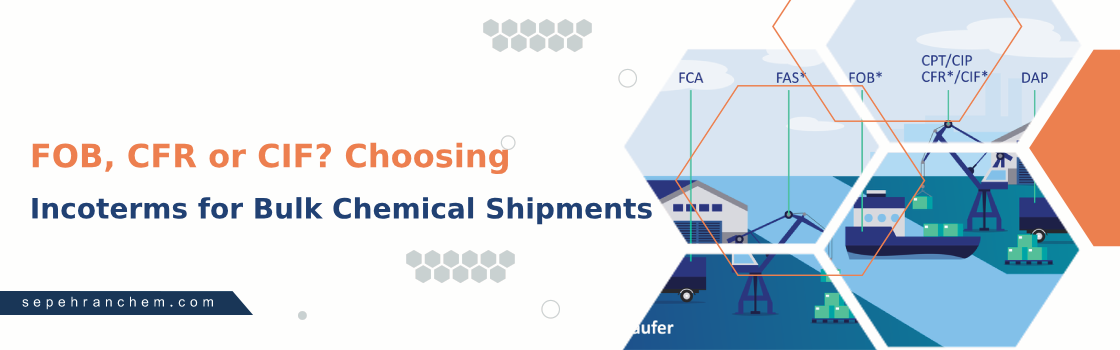
You have a quote in hand, and its delivery line ends in three letters: FOB, CFR, or CIF. Those letters decide who books the ship, who pays for freight and insurance, and who carries the risk if something goes wrong at sea. Choosing among Incoterms for chemical shipments is therefore a business decision, not a formality. Sepehran’s product pages list FOB, CFR and CIF as available terms, so this guide explains how to choose between them.
Incoterms are the standard trade rules published by the International Chamber of Commerce (ICC). The current edition, Incoterms 2020, is the one most contracts reference. FOB, CFR and CIF are all sea and inland waterway rules, which makes them a natural fit for Incoterms for bulk chemical export by vessel. Each one must be followed by a named port or place and the edition, for example “CIF [named port] Incoterms 2020.”
The Best Incoterms for Chemical Shipments in One Glance
- FOB (Free on Board). The seller delivers the goods on board the vessel nominated by the buyer at the named port of shipment. The buyer books the ship and pays the main freight, and risk passes to the buyer once the goods are on board.
- CFR (Cost and Freight). The seller also delivers the goods on board, but then contracts and pays for sea freight to the named port of destination. Risk still passes at loading, not on arrival, which surprises many first-time buyers.
- CIF (Cost, Insurance and Freight). CIF works like CFR with one addition: the seller must buy marine insurance for the buyer’s benefit. Under Incoterms 2020, the minimum cover is Institute Cargo Clauses (C), at no less than 110% of the contract value.
| Factors | FOB | CFR | CIF |
|---|---|---|---|
| Risk passes to buyer | On board at port of shipment | On board at port of shipment | On board at port of shipment |
| Main sea freight | Buyer | Seller | Seller |
| Marine insurance | Buyer’s choice | Buyer’s choice | Seller (minimum cover) |
| Export clearance | Seller | Seller | Seller |
| Unloading and import clearance | Buyer | Buyer | Buyer |
Note: Under CFR and CIF, unloading at the destination port is the buyer’s cost unless the freight contract already includes it.
Notice what stays the same. In all three terms, the seller handles export clearance, the buyer handles import clearance, and risk moves at the same moment: when the cargo is on board. The real difference is who pays freight and insurance, and who controls the shipping arrangements.
Which Term Suits Which Buyer
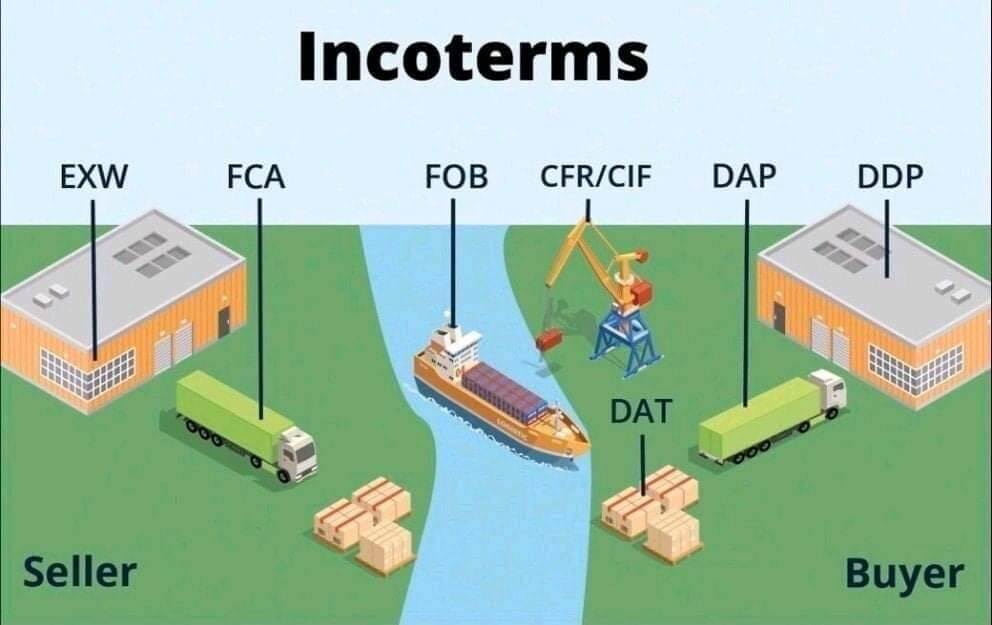
Comparing FOB vs CFR vs CIF chemicals comes down to how much of the shipping you want to manage yourself. Three typical buyers show how the choice plays out.
The First-Time Importer
If you have never booked a chemical shipment, a term where the seller arranges the sea freight can remove a lot of friction. You avoid finding a shipping line, negotiating freight, and coordinating loading dates on your own. A fertilizer distributor ordering Iranian urea supply for the first time is a good example.
Between CFR and CIF, a first-time buyer usually benefits from CIF, because insurance is arranged for you. Just remember two things. Risk still passes at loading, so the insurance policy is your protection during the voyage. And the minimum cover is limited, which we explain in the insurance section below.
The Buyer With Its Own Forwarder
If you already work with a freight forwarder and have shipping contracts, FOB gives you the most control. You choose the vessel, the carrier, the schedule, and the insurance. You also deal directly with the shipping line if problems arise.
The trade-off is responsibility. You must nominate the vessel on time and coordinate its arrival with the seller’s loading window. A missed slot can lead to waiting costs, and under FOB those usually land on the buyer. FOB suits experienced importers who can manage that coordination.
The Buyer Who Wants One Landed Price
Many buyers ask for a single all-in number, and CIF comes closest among these three terms. It bundles the goods, sea freight, and minimum insurance into one price to the destination port.
It is not a delivered price, however. CIF ends at the port. Unloading, import clearance, duties, and inland transport still belong to the buyer. If you need a price that covers more than the port, discuss it directly with the supplier, because it falls outside these three terms. For a breakdown of what changes a chemical quote, see our separate guide.
Chemical-Specific Issues With Incoterms for Chemical Shipments
Incoterms were written for all kinds of goods, but chemical cargo adds practical questions. Here are the ones that matter most when choosing Incoterms for chemical shipments.
Hazardous Cargo
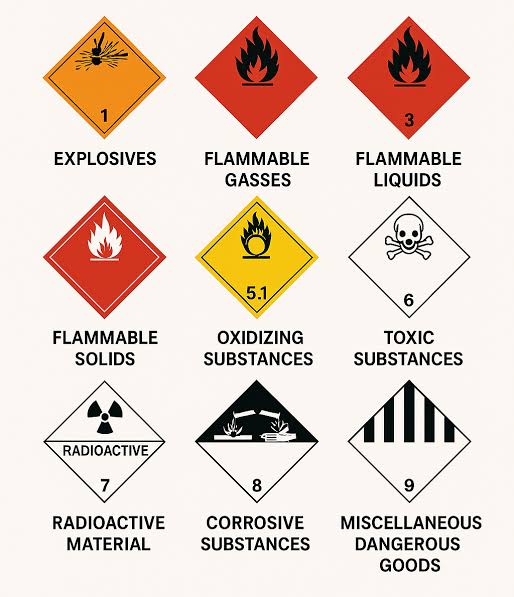
Many chemicals count as dangerous goods, and carriers can refuse them or add conditions. Take bulk methanol, a flammable liquid that shipping lines treat with extra care. Under FOB, you nominate the vessel, so you need to confirm early that the shipping line accepts your product. Under CFR and CIF, the seller books the shipping, so the seller must confirm acceptance before the cargo moves.
Either way, the hazard information has to be accurate and consistent across the paperwork. Agree in advance who provides the dangerous goods declaration and who checks it. The bill of lading, the document issued by the carrier as a receipt and as evidence of the transport contract, should also describe the cargo correctly, since errors can delay loading. We also suggest you take a look at our guide to dangerous goods classification chemicals.
Tank and Bag Handling
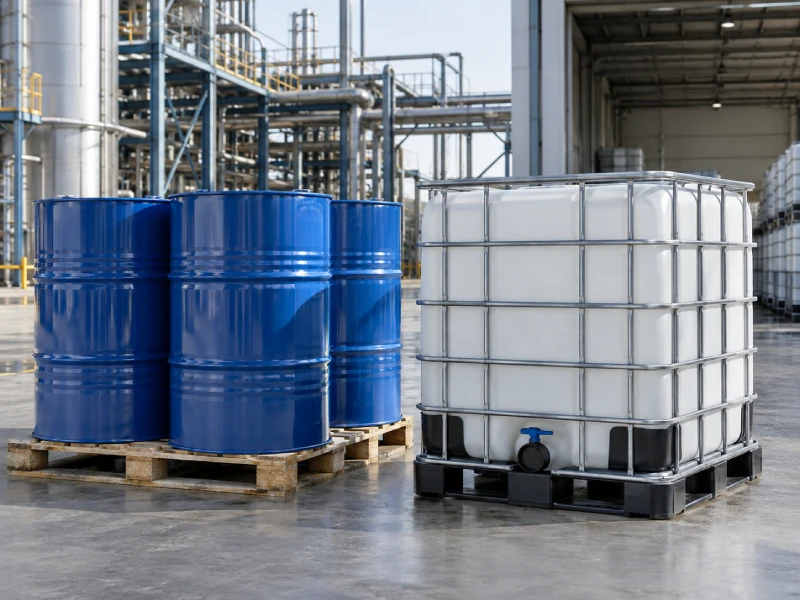
How the product is packed affects where delivery really happens. Liquids such as methanol often move in ISO tanks, while solids move in bags. A product such as caustic soda flakes shipped in 25 kg bags needs different loading care than a liquid pumped into a tank.
There is also a technical point. The ICC designed FOB, CFR and CIF for goods that are delivered on board a vessel. Cargo packed in containers is usually handed to the carrier at a terminal before it is loaded, so the moment risk passes can become unclear. If your goods ship in containers or ISO tanks, ask your forwarder how the delivery point works in practice and make sure the contract states it clearly.
Also decide who is responsible for waiting time. Incoterms do not settle demurrage disputes on their own. Your sales contract should say who bears waiting costs at the loading port and at the discharge port.
Insurance Cover
Insurance deserves extra attention with chemicals, because leakage, contamination, and damaged packaging are realistic risks. Under CIF, the seller only has to buy the minimum: Institute Cargo Clauses (C), which cover a limited list of named risks, at 110% of the contract value.
Clauses (A) are broader. They are often called all-risks cover, though they still have exclusions. If your chemical is sensitive or high in value, you can ask the seller to arrange higher cover and agree who pays for the upgrade. Or you can choose CFR or FOB and buy your own policy. Also check who can claim. The policy should let the buyer, or another party with an insurable interest, claim directly. The key is to ask for the policy terms, not just the word “insured.”
Common Mistakes in Incoterms for Chemical Shipments
Most Incoterms problems come from loose wording, not from the rules themselves. Watch for these.
- A vague named place. “FOB Iran” or “CIF Persian Gulf” is too broad. The named port or place fixes where the seller’s delivery obligation ends or where freight is paid to, so it must be specific. Name the exact port, and for FOB add the loading point if the port has several terminals.
- Mismatched terms between quote and contract. A quote may say CFR while the sales contract says CIF, or one document may name a different port. When documents conflict, disputes follow. Check that the quote, the contract, the invoice, and the bill of lading all show the same term, the same named place, and the same edition.
- Leaving out the edition. If the contract does not say Incoterms 2020, the parties may later disagree about which version applies. Write the edition every time.
- Skipping the loading details. The seller’s responsibility ends when the goods are on board, and the buyer’s responsibility begins there. For chemicals, agree on the loading window, who pays for any extra handling, and what happens if loading is delayed. Clear notice periods between seller and buyer prevent most arguments.
- Assuming risk passes on arrival. Under CFR and CIF, risk passes at loading even though the seller pays freight. Many buyers expect the seller to bear risk until the cargo reaches port. It does not work that way.
- Treating Incoterms as a full contract. The ICC rules cover delivery, costs, and risk. They do not cover payment terms, ownership transfer, or remedies for breach. Those belong in the contract itself.
Frequently Asked Questions
Under FOB, the buyer pays both. Under CFR, the seller pays sea freight and the buyer arranges any insurance. Under CIF, the seller pays sea freight and buys minimum insurance for the buyer.
No. Risk passes to the buyer when the goods are on board at the port of shipment. The seller’s insurance policy is meant to protect the buyer during the voyage.
Yes. You can agree on broader cover with the seller, or arrange your own policy. Put the agreed cover in writing.
It depends on your experience. Buyers with no shipping setup often prefer CIF or CFR, while buyers with a forwarder often prefer FOB. Choose the term that matches the logistics you can actually manage.
No. They define delivery, costs, and risk only. Payment, quality, and dispute terms still need to be written into the contract.
Choose the Terms That Fit Your Logistics
The best choice among Incoterms for chemical shipments is the one that matches your shipping experience, your insurance needs, and the cargo you are moving. Start with how much control you want, check the named port, and make sure every document says the same thing.