
Sulfur and sulfuric acid look like two separate products, but they sit on the same chain. Most sulfuric acid is made from sulfur: the sulfur is burned to form sulfur dioxide, converted to sulfur trioxide, and absorbed to make acid. That link means a change in sulfur supply can reach the acid market. Understanding the sulfur to sulfuric acid supply chain helps buyers plan orders, ask better questions, and avoid surprises. This guide explains how sulfuric acid is made from sulfur, where sulfur goes besides acid, and what to ask a supplier about each product.
How Sulfuric Acid Is Made From Sulfur
Chemistry references describe the industrial method as the contact process. It works in three main stages, and the flow looks like this:
Sulfur (S)
↓
burned in air
Sulfur dioxide (SO₂)
↓
oxidized over a catalyst
Sulfur trioxide (SO₃)
↓
absorbed in sulfuric acid to form oleum
Oleum
↓
diluted with water
Sulfuric acid (H₂SO₄)
The contact process replaced older methods because it is more economical for making concentrated acid, and it remains the standard route today. Here is what happens at each step.
- Step 1: Sulfur becomes sulfur dioxide. Sulfur is burned in air in a furnace. The reaction produces sulfur dioxide gas. The gas is then purified, because dust and other impurities can damage the catalyst used in the next step.
- Step 2: Sulfur dioxide becomes sulfur trioxide. The purified gas is mixed with more oxygen and passed over a catalyst, usually vanadium pentoxide. The reaction runs at roughly 450 °C and at or just above normal atmospheric pressure. It is reversible, so plants control temperature and gas flow carefully to push the reaction toward sulfur trioxide.
- Step 3: Sulfur trioxide becomes sulfuric acid. You might expect plants to dissolve sulfur trioxide directly in water, but that releases so much heat that it forms a hazardous acid mist. Instead, the sulfur trioxide is absorbed in concentrated sulfuric acid to form oleum, also called disulfuric acid. The oleum is then diluted with water to make sulfuric acid. Many modern plants use a double contact, double absorption design, which passes the gases through the conversion and absorption stages twice to raise efficiency.
Sulfuric Acid Raw Materials
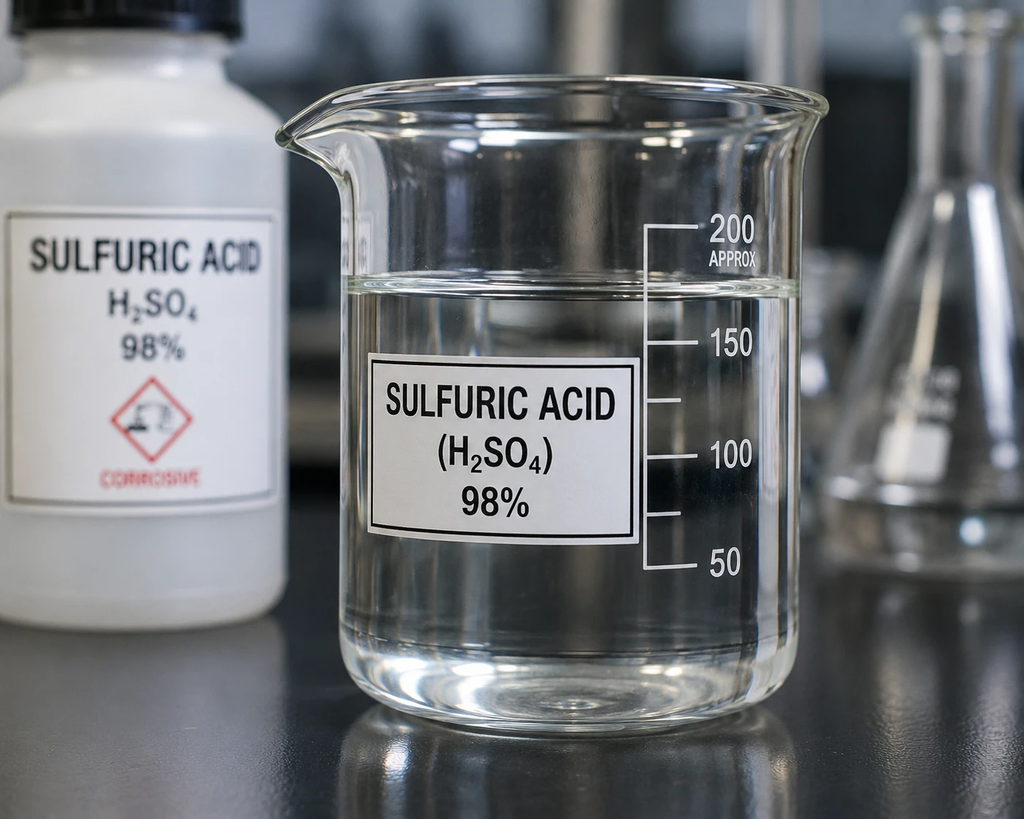
The sulfuric acid raw materials are simple: sulfur, air, and water. Sulfur is the one that matters most to buyers, because it is the source of every sulfur atom in the final acid.
Because impurities can damage the catalyst, acid makers pay close attention to the quality of the sulfur they burn and to how well they clean the gas afterward. This is one reason sulfur buyers and acid buyers both benefit from clear documents. Sulfur is not the only possible feedstock. Chemistry references note that sulfur-bearing minerals, such as metal sulfide ores, can be roasted to produce sulfur dioxide, and that used acid can be reprocessed. Even so, burning sulfur is the most direct route.
Much of the world’s industrial sulfur is recovered as a by-product when oil and natural gas are cleaned of sulfur compounds. This recovered sulfur ties the sulfur market to energy and refining activity, which is one reason sulfur availability can shift for reasons outside the chemical industry.
Where Sulfur Goes Besides Acid
Acid making is the biggest single outlet for sulfur, but it is not the only one. Sepehran’s product page describes industrial sulfur for chemical, fertilizer, and manufacturing applications, so those are the areas to know.
Sulfur Uses in Fertilizer
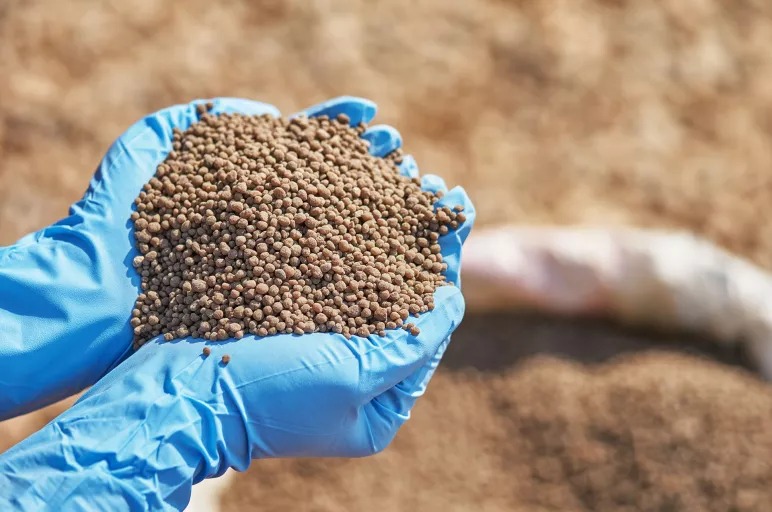
Sulfur is an essential plant nutrient, so it has a direct role in agriculture. Crops need it alongside nitrogen, phosphorus, and potassium. Sulfur can reach fields as a nutrient source in its own right, and it also enters fertilizers indirectly through sulfur-containing products such as ammonium sulfate and superphosphate, both of which are made with sulfuric acid.
That indirect route is where the chain matters most. Sulfuric acid is a central input in fertilizer production, and bulk supply of the acid is often what keeps these plants running. In phosphate fertilizer, for example, it is used to process phosphate rock into products that plants can absorb. So a fertilizer producer can depend on sulfur twice: once as a nutrient and once as the raw material behind the acid used in processing. If you work in this area, our category of agricultural chemicals shows the related products Sepehran lists for farm and fertilizer buyers.
Manufacturing and Chemical Uses
Outside agriculture, sulfur feeds a wide range of manufacturing. It is a raw material for other sulfur chemicals, and it is used in processes such as rubber production. Buyers in these fields usually care about consistent quality from one shipment to the next, because their own processes depend on stable inputs.
Sepehran’s sulfur page lists customized packaging options, including bulk and industrial packaging, according to buyer requirements. If you plan to import industrial sulfur for any of these uses, tell the supplier which one applies, since the use shapes what you should check.
Why Buyers Care About the Sulfur to Sulfuric Acid Supply Chain
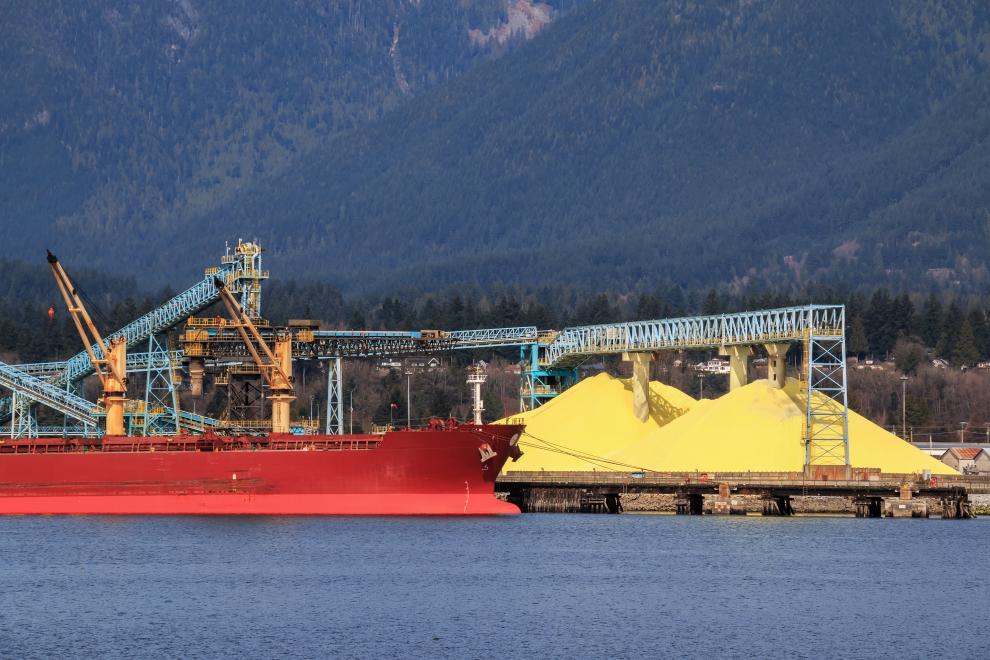
For buyers, the link between the two products comes down to cost and availability. Because sulfur is the main raw material for acid made by the contact process, conditions in the sulfur market tend to carry through to acid. If sulfur becomes harder to source, acid producers feel the pressure first, and buyers of acid can feel it later. This does not mean the two always move together or by the same amount. Other factors, including freight and local demand, also play a part. But the connection is real, and it is worth watching if you buy either product regularly.
The practical lesson is to think about the sulfur to sulfuric acid supply chain as a whole. A buyer who uses acid in fertilizer production and also buys sulfur as a nutrient source has exposure at both ends. A buyer who plans a bulk supply contract may want to ask how stable the underlying supply is.
Consider how this looks from three positions. A fertilizer producer who buys acid is exposed to sulfur conditions indirectly, through the acid price and availability. A farm input distributor who buys sulfur as a nutrient source is exposed directly. A company that buys both has a stake at each end and may gain from planning the two orders together.
What to Ask a Supplier About Each Product
The questions differ a little between the two products. The table summarizes the main points.
| Topic | Sulfur | Sulfuric acid |
|---|---|---|
| Your use | Acid making, fertilizer, or manufacturing | Fertilizer production, industrial processing, or another use |
| Documents | COA and TDS to compare against your requirement | COA, and the safety data sheet for handling |
| Packaging | Bulk and industrial options, customized to your needs | ISO tank containers, IBC totes, or bulk road tankers, as listed on the product page |
| Quantity | Bulk quantities per shipment | Bulk quantities per shipment |
| Delivery terms | FOB, CFR, or CIF options | FOB, CFR, or CIF options |
Always confirm the exact specification you need against the supplier’s COA.
Questions That Apply to Both
A few questions are worth asking whichever product you buy:
- Can the supplier support regular, repeat orders, or only a single shipment?
- Which documents come with each shipment, and can you see samples before you order?
- How does the supplier keep results consistent from one batch to the next?
- Which delivery terms apply, and where do cost and risk pass to you?
Sulfuric acid also needs extra care in transport, because it is corrosive. Make sure your site can receive the packaging format you choose, and plan the handling steps before the cargo is on its way. Because both products move in bulk, timing and storage deserve early attention. Decide where the cargo will be received, how it will be stored, and how often you will need it, then share those details in your first inquiry. A supplier can only plan well around information it has.
If you need both products, buying from one source can simplify paperwork and communication. Companies that supply sulfuric acid alongside sulfur can discuss both in a single inquiry, though you should still evaluate each product on its own documents.
Frequently Asked Questions
Sulfur is burned to make sulfur dioxide. The sulfur dioxide is oxidized to sulfur trioxide over a catalyst, and the sulfur trioxide is absorbed in sulfuric acid to form oleum. The oleum is then diluted with water to make sulfuric acid.
No. The main sulfuric acid raw materials are sulfur, air, and water. Sulfur-bearing minerals and used acid can also serve as sources of sulfur dioxide, but burning sulfur is the most direct route.
Oleum is a solution of sulfur trioxide in sulfuric acid, also called disulfuric acid. It is an intermediate in the contact process, because adding sulfur trioxide directly to water would release too much heat.
Sulfur is the main raw material for acid made by the contact process. Changes in sulfur availability can therefore affect the acid market, and buyers of either product benefit from understanding the link.
Sulfur serves as a plant nutrient, and it is also the starting point for the sulfuric acid used in fertilizer production, including phosphate processing.
Recovered sulfur is sulfur taken out of oil and natural gas during processing. It is a major source of industrial sulfur.
No. Each product should be judged on its own documents and delivery details. Using one source can simplify communication, but it is a convenience, not a requirement.
Ask for the COA and the safety data sheet for either product. For sulfur, you can also request the TDS.
Plan Both Ends of the Chain
The sulfur to sulfuric acid supply chain links two products that many buyers purchase separately. Know how the chain works, tell your supplier what you plan to use each product for, and compare the documents against your own requirements. Whether you need sulfur for acid making, fertilizer, or manufacturing, or acid for processing, clear information at the start of an inquiry saves time on both sides. Ready to discuss your needs? Request a Bulk Supply Quote and tell us the product, your application, the quantity, and your destination.