
Sodium bicarbonate looks like one product on paper: the same white crystalline powder, the same basic chemical formula (NaHCO₃), but the grade you actually need depends entirely on where it’s going next. A feed mill blending it into cattle rations has completely different purity requirements than a bakery buying it for leavening, and both are worlds apart from a factory using it to scrub sulfur out of flue gas. Ordering the wrong grade doesn’t just waste money; in food and feed applications, it can mean a shipment that fails a safety inspection entirely. This guide breaks down the three main grades of sodium bicarbonate- food, feed, and industrial- so buyers can specify exactly what they need before placing an order. We’ll cover the purity differences between each grade, the industries each one serves, and the quality documentation you should expect regardless of grade. Whether you’re comparing sodium bicarbonate food-grade options for a bakery or beverage line, or evaluating sodium bicarbonate feed-grade material for a feed mill, the goal is the same: match the certification and purity level to the actual end use, not just the price per ton.
Why Grade Matters More Than the Chemical Formula
NaHCO₃ is NaHCO₃ at the molecular level, but “grade” refers to everything around that core molecule: purity percentage, particle size, moisture content, and critically, the allowable limits on trace contaminants like heavy metals. Sodium bicarbonate feed and food grade both have to meet strict limits on things like lead, arsenic, and mercury because the material ends up in a body, whether animal or human. Industrial-grade material doesn’t carry those same restrictions, which is exactly why it’s priced differently and why the two should never be substituted for each other, even though the base chemistry looks identical on a data sheet.
Grade Specification Breakdown
| Specification | Industrial Grade | Food Grade | Feed Grade |
|---|---|---|---|
| Typical purity | 99.0%+ | 99.5%+ (USP/food-grade standard) | 99.0%+ |
| Heavy metal limits | Not strictly regulated | Strict (lead, arsenic, mercury capped per food safety standards) | Strict (regulated under feed safety standards) |
| Particle size | Coarser, variable | Fine, controlled for solubility and texture | Fine to medium, application-dependent |
| Common certifications | Standard COA/MSDS | Food additive E500, Non-GMO certification where applicable | Feed-grade compliance documentation, COA |
| Primary use cases | Flue gas treatment, leather tanning, detergent manufacturing | Baking, food production, beverage carbonation | Livestock feed buffer, poultry nutrition |
| Packaging | Bulk bags, drums | Food-safe lined bags, drums | Bulk bags, lined for feed-safety compliance |
This table is the fastest way to confirm you’re asking your supplier for the right thing; and it’s worth sending directly to a new supplier alongside your purchase inquiry so there’s no ambiguity about which grade you’re requesting.
Feed Grade: Supporting Livestock and Poultry Nutrition
Sodium bicarbonate feed grade plays a specific role in animal nutrition: it acts as a livestock feed buffer, helping regulate rumen pH in cattle and other ruminants. When dairy cows and beef cattle are fed high-grain diets, the rumen can become too acidic, reducing feed efficiency and sometimes causing digestive problems. Adding sodium bicarbonate to the feed helps stabilize rumen pH, supporting better digestion and, in dairy operations, more consistent milk fat production.
Beyond cattle, sodium bicarbonate feed grade also supports poultry nutrition, where it’s used in smaller, carefully measured amounts to help manage electrolyte balance, particularly during heat stress, when poultry are more prone to respiratory alkalosis and reduced feed intake.
Demand for feed-grade sodium bicarbonate is growing fastest in markets where livestock and poultry production is expanding alongside more intensive, feed-efficiency-focused farming practices. Pakistan and Central Asia, particularly Tajikistan and Turkmenistan, are among the more promising growth markets here, as both regions are scaling up commercial dairy and poultry operations and increasingly sourcing quality feed additives rather than relying on unregulated local supply. A dependable sodium bicarbonate feed grade supplier Central Asia buyers can count on needs to combine consistent purity with reliable shipment volumes, since feed mills operate on tight production schedules and can’t easily absorb a delayed or contaminated batch.
If you’re sourcing for livestock or poultry operations in this region, Sepehran supports export to livestock and feed markets across Central Asia with documented feed-grade specifications and consistent supply volumes. Buyers should always confirm that sodium bicarbonate feed grade shipments come with contamination testing specific to feed-safety standards, rather than a generic industrial COA relabeled for feed use.
Food Grade: Purity for Baking, Food Production, and Beverage Carbonation
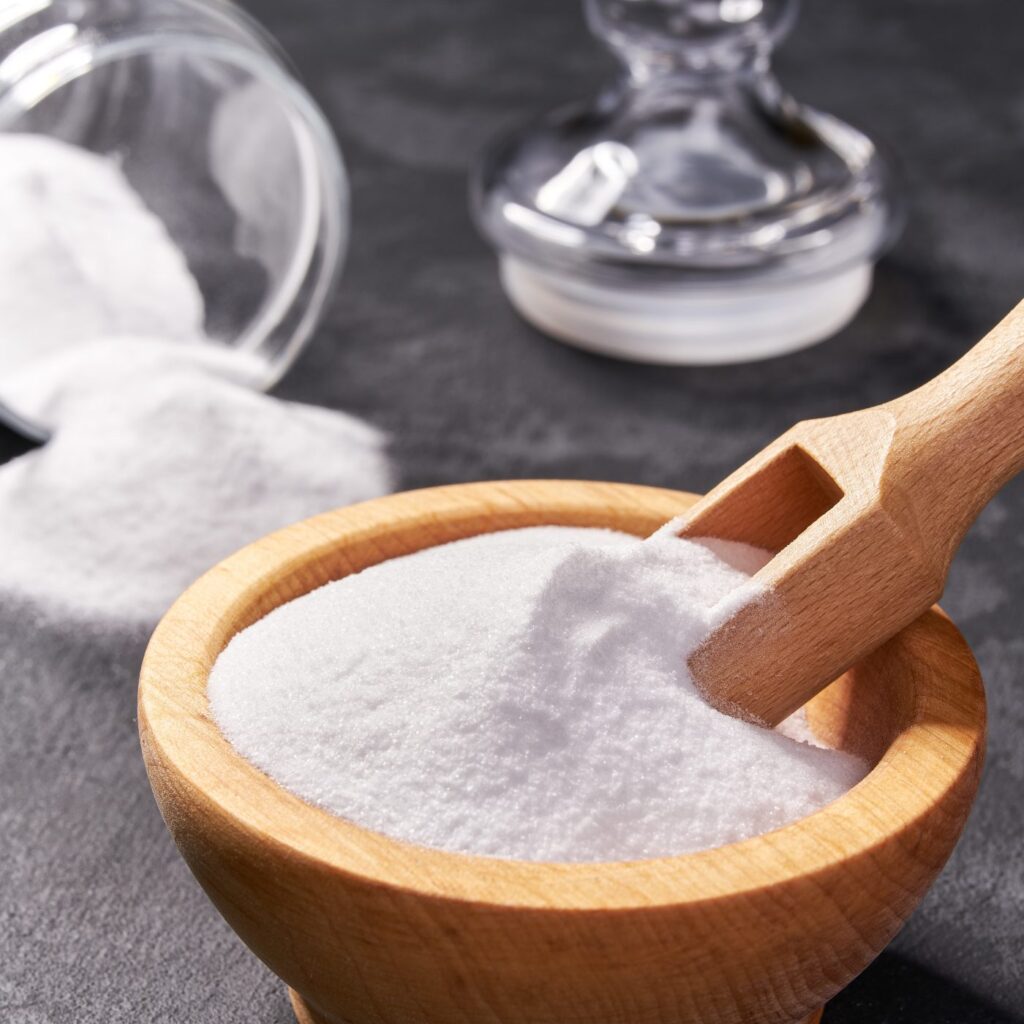
Sodium bicarbonate food grade is the grade most people are already familiar with, even if they don’t know it by its formal name; it’s the leavening agent in baking soda, the additive that gives certain beverages their carbonation profile, and a functional ingredient across a wide range of packaged food products. Internationally, it’s registered as food additive E500, and any batch sold into food production needs to meet that classification’s purity and contamination limits.
For baking applications specifically, particle size and solubility matter almost as much as purity; a food-grade batch needs to dissolve evenly and react predictably with acidic ingredients to produce consistent leavening. In beverage carbonation and food-processing applications, buyers increasingly ask for Non-GMO certification alongside standard purity documentation, particularly for products marketed toward health-conscious or export-restricted retail markets.
Pakistan is a notable growth market on the food-grade side as well, driven by an expanding packaged food and bakery sector that increasingly demands documented, traceable ingredient sourcing rather than unverified local material. A reliable food grade sodium bicarbonate exporter Pakistan buyers can trust should be able to provide a current Certificate of Analysis for every batch, not a generic “typical values” sheet, and should be transparent about testing methodology for heavy metal limits specifically, since that’s the detail food safety auditors check most closely. Any sodium bicarbonate food grade order intended for retail food products or beverage manufacturing should also come with clear labeling confirming compliance with E500 additive standards, so your own regulatory filings go smoothly on the receiving end.
Packaging and Certification Requirements by Grade
Packaging choices aren’t just logistics; they directly affect whether a shipment stays within specification by the time it reaches your facility. Sodium bicarbonate food grade material should always ship in food-safe, sealed inner liners inside outer bags or drums, preventing any contact with packaging materials that could introduce contamination. Sodium bicarbonate feed grade shipments follow similar principles, using feed-safety-compliant packaging that keeps the material free of cross-contamination from other cargo during transit.
Industrial-grade shipments have more flexibility, typically moving in standard bulk bags (super sacks) or fiber drums, since the end application doesn’t carry the same contamination sensitivity. Regardless of grade, request the packaging specification sheet alongside the Certificate of Analysis, and confirm which certifications apply; food additive E500 registration and Non-GMO certification for food-grade orders, feed-safety compliance documentation for feed-grade orders, and standard chemical grade specifications for industrial orders.
Industrial Grade: Flue Gas Treatment, Tanning, and Detergent Manufacturing
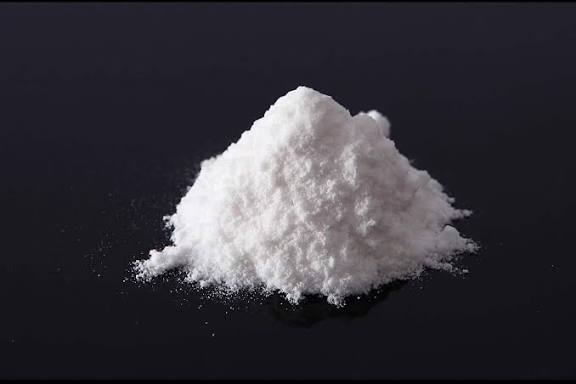
Industrial-grade sodium bicarbonate serves a different set of buyers entirely, and purity requirements, while still important for consistent performance, aren’t governed by food or feed safety regulations. Three applications account for most industrial demand:
- Flue gas treatment: Sodium bicarbonate is injected into flue gas streams to neutralize acidic pollutants like sulfur dioxide and hydrogen chloride before emissions are released, making it a key input for industrial and power-plant emissions control systems.
- Leather tanning: It’s used in tanning processes to help regulate pH during hide processing, an application where consistent chemical grade specifications matter for predictable tanning results across large hide batches.
- Detergent manufacturing: Sodium bicarbonate functions as a mild alkaline buffering agent in powder and liquid detergent formulations, contributing to cleaning performance without the harshness of stronger alkaline chemicals.
Buyers in these industries typically order industrial baking soda bulk volumes, often multiple tons per shipment, where cost efficiency and consistent particle size matter more than the tighter contamination limits required for food or feed grade. That said, “industrial grade” doesn’t mean “unverified”: buyers should still expect a proper COA confirming purity and consistency batch to batch, even without food-safety-level testing.
Quality Assurance and Traceability: Preventing Contamination Across All Three Grades
Whichever grade you’re buying, the underlying question a good QA process answers is the same: can this batch be traced back to a specific production run, and has it been tested for the contaminants that matter for your application?
For food-grade and feed-grade material specifically, the most important thing to verify is heavy metal contamination testing; lead, arsenic, cadmium, and mercury are the standard panel, and international feed and food safety regulations set maximum allowable limits for each. A supplier should be able to provide test results against a named method (rather than a vague “passes safety standards” statement) and should tie those results to a specific batch number and test date, the same way any credible Certificate of Analysis should for other bulk chemicals.
Sodium bicarbonate purity itself should also be reported as a specific measured percentage for the batch you’re buying, not a general range copied across multiple shipments. Combined with documented chemical grade specifications and, where relevant, Non-GMO certification for food applications, this is what allows a buyer’s own quality tea, or a destination country’s customs and safety inspectors, to verify the shipment quickly rather than holding it for additional testing.
Iran has a well-established sodium bicarbonate production base overall; producers like Pars Soda represent the broader domestic manufacturing landscape built around the country’s soda ash and bicarbonate industry. Within that landscape, what should differentiate the supplier you choose is documented, batch-specific traceability across all three grades; not just a general claim of quality.
Common Buyer Questions
No. Both meet strict contamination limits, but food grade is certified for human food and beverage use under standards like E500, while feed grade is certified specifically for animal nutrition applications such as rumen buffering. They shouldn’t be swapped even though the purity percentages can look similar on paper.
No. Purity percentage alone doesn’t capture contamination limits on heavy metals, which industrial grade isn’t tested or certified against. Only material certified as sodium bicarbonate food grade or feed grade should be used in those applications, regardless of how high the general purity figure appears.
A batch-specific Certificate of Analysis with heavy metal test results, an MSDS, and for food or feed grade, confirmation of the relevant certification (E500 registration, Non-GMO certification where applicable, or feed-safety compliance documentation). Ask for these before finalizing your purchase order, not after the shipment has left port.
Choosing the Right Grade and Supplier
A quick way to confirm you’re sourcing correctly: if your end use involves anything eaten, fed to an animal, or consumed in a beverage, you need food grade or feed grade specifically, with full contamination testing documentation; never industrial grade, regardless of price. If your application is flue gas treatment, tanning, or detergent manufacturing, industrial grade is the appropriate and more cost-effective choice, but confirm consistent particle size and purity across shipments.
Sepehran manufactures sodium bicarbonate across all three grades: food, feed, and industrial, with full Certificates of Analysis, contamination testing documentation, and packaging suited to each application’s requirements. If you’re ready to place an order or want current specification sheets, you can supply bulk Sodium Bicarbonate for your operation by reaching out to the export sales team directly, with WhatsApp contact details available on the product page for fast, specific answers about grade and packaging.