
When agricultural distributors and fertilizer importers compare major urea suppliers, Iranian vs Russian urea is an important comparison for buyers in markets such as India, Pakistan, and parts of Africa. Both Iran and Russia have large natural gas reserves and established fertilizer industries. Both can produce urea 46% (urea with around 46% nitrogen), making them important sources of nitrogen fertilizer for international markets.
However, the cheapest product at the factory or port is not always the cheapest option for the buyer. The real procurement cost also depends on freight, shipping distance, order volume, export conditions, delivery terms, and the final destination. For this reason, an Iranian vs Russian urea price comparison should focus on the complete landed cost rather than the FOB product price alone.
Iranian vs Russian Urea: What Is the Main Difference?
The main difference for international buyers is not necessarily the basic chemical quality of the product. Both Iranian and Russian producers manufacture urea for agricultural use, and buyers can source both prilled and granular grades. The bigger differences are related to:
- Production and energy costs
- Export availability
- Shipping routes
- Freight rates
- Transit times
- Order volume
- Product form
- Destination market
- Incoterms and other delivery conditions
This means the better source depends heavily on where the buyer needs the fertilizer delivered. For example, an importer in India or Pakistan may evaluate Iranian urea differently from a buyer located in Europe or another market closer to Russian production and export ports.
What Affects Iranian vs Russian Urea Prices?
Urea is produced from ammonia, and ammonia production relies heavily on natural gas. Both Iran and Russia have large natural gas resources, giving their fertilizer industries an important feedstock advantage compared with producers that depend heavily on imported gas. However, production cost is only one part of the final price. An international buyer should consider:
- FOB price: The price of the product at the agreed export port.
- Freight: The cost of transporting the urea to the destination port.
- Insurance: Depending on the delivery term, marine insurance may be arranged by the buyer or seller.
- Port and handling charges: Loading, unloading, customs, and terminal costs can affect the total procurement cost.
- Inland transportation: The final movement from the destination port or border crossing to the buyer’s warehouse can be significant.
This is why an Iranian vs Russian urea price comparison should always compare equivalent delivery terms.
Iranian Urea Price and Production Advantages
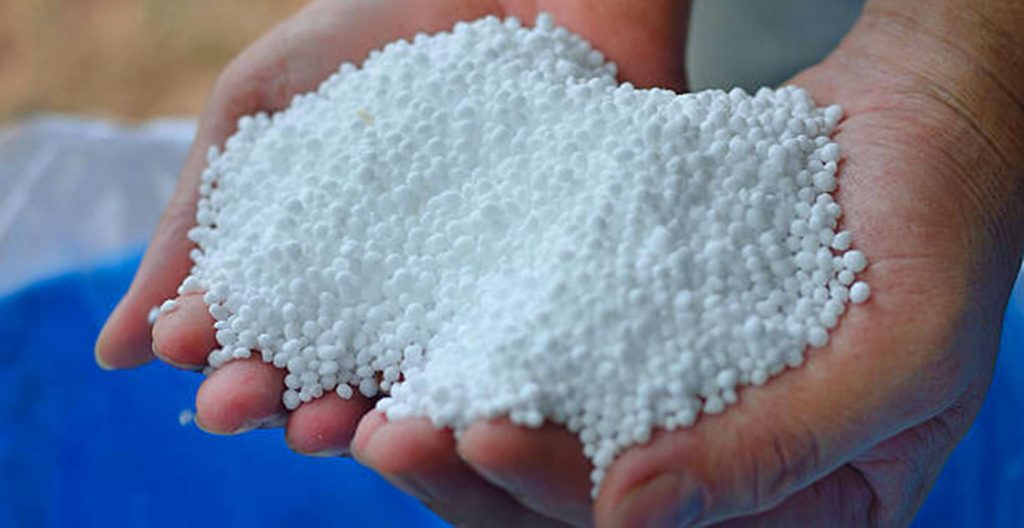
Iran has a large petrochemical and fertilizer production base, particularly around the Persian Gulf. So it’s not unexpected to hear terms like “Iran petrochemical supplier“. Natural gas is an important feedstock for ammonia and urea production. For international buyers, this can support competitive baseline pricing, particularly when purchasing in wholesale quantities.
Iranian producers also have access to export terminals in the Persian Gulf, allowing urea to be shipped toward South Asian and African markets. For buyers sourcing urea from Iran, the combination of production capacity and access to regional shipping routes can make the country an attractive option. However, the final quotation still depends on the current market, product specification, order size, port, and delivery terms.
Russian Urea Supply and Export Considerations
Russia is also a major producer of nitrogen fertilizers and has substantial urea production capacity. Russian suppliers can be highly competitive for buyers located close to Russian production and export routes. However, the most suitable source can change when the destination is farther away. For buyers in South Asia, for example, the shipping distance and available routes should be included in the comparison.
Export policies, domestic fertilizer demand, port availability, freight rates, and seasonal market conditions can also affect Russian urea availability and pricing. Therefore, buyers should avoid treating Russian urea prices as fixed. A current quotation should always be requested for the exact product, quantity, destination, and delivery term.
Logistics: Where Iranian Urea Can Have an Advantage
Logistics can make a major difference in the Iranian vs Russian urea comparison. Iran’s southern ports provide direct maritime access to the Indian Ocean and major markets in South Asia. Bandar Abbas is particularly important for international cargo moving from Iran toward markets such as India and Pakistan. For nearby markets, Iran can also use road and rail routes.
Pakistan is a particularly relevant example because overland transportation from Iran can provide an alternative to longer maritime routes. This can give buyers more flexibility when planning fertilizer deliveries around agricultural seasons. However, transit times should always be confirmed for the individual shipment. Vessel schedules, customs clearance, border conditions, port congestion, weather, and inland transportation can all affect the final delivery date.
Prilled vs Granular Urea: Which Should Buyers Choose?
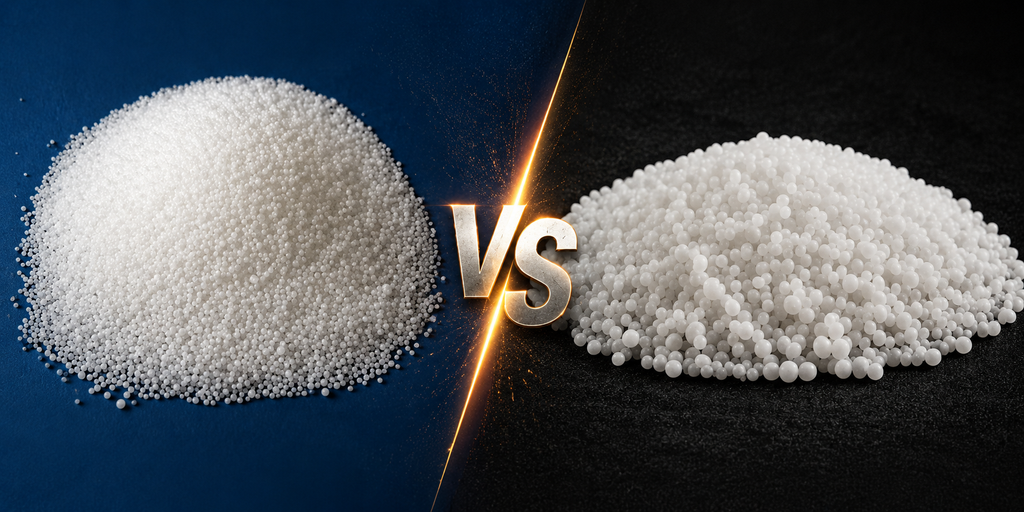
Both prilled and granular urea contain nitrogen and can be used as nitrogen fertilizers, but their physical properties are different.
Prilled Urea
Prilled urea is produced by forming small spherical particles. It dissolves relatively quickly and can be suitable for applications where rapid dissolution is required. Prilled urea can also be attractive for buyers looking for competitive bulk pricing, depending on the producer and current market conditions.
Granular Urea
Granular urea contains larger and generally harder particles. Its greater physical strength makes it well suited to mechanical spreading and large-scale agricultural operations. The larger particles can also provide better handling performance during storage and transport when compared with smaller, more fragile prills. For large agricultural distributors, the choice between prilled and granular urea should therefore consider not only the price per ton but also handling, storage, application equipment, and crop requirements.
Iranian vs Russian Urea: Technical Comparison
| Comparison factor | Iranian Urea | Russian Urea |
|---|---|---|
| Nitrogen content | Commonly 46% | Commonly 46% |
| Product forms | Prilled and granular | Prilled and granular |
| Main cost advantage | Competitive gas-based production and regional logistics | Large production capacity and established export infrastructure |
| South Asian logistics | Strong access through Persian Gulf routes | Generally longer routes to South Asia |
| Pakistan | Maritime and potential overland options | Mainly maritime or regional routes |
| India | Direct Persian Gulf shipping routes | Longer-distance maritime routes |
| Final price | Depends on FOB, freight and destination | Depends on FOB, freight and destination |
| Best comparison method | Total landed cost | Total landed cost |
The table shows why there is no universal answer to the question of which country’s urea is cheaper.
The most useful comparison is always product + logistics + destination.
Timing Urea Purchases Around Agricultural Seasons
Fertilizer demand is seasonal. Buyers supplying farmers in India, Pakistan, and other agricultural markets need to plan deliveries around planting and application periods. A low supplier price is not useful if the cargo arrives after the required application window. For this reason, procurement teams should consider:
- Expected planting dates
- Current inventory
- Supplier production schedules
- Vessel availability
- Port congestion
- Border conditions
- Inland transportation
- Required delivery buffer
A supplier that offers slightly better logistics can sometimes provide better overall value even when its initial FOB quotation is not the lowest.
Why Buy Urea Directly From Sepehran?
The choice between Iranian and Russian urea is only one part of the procurement decision. The supplier itself can also affect price, availability, documentation, and delivery reliability. Sepehran Chemistry operates five specialized production facilities, has around 400 employees, and reports annual production of approximately 180,000 tons. The company also exports to 63 countries. These figures support its position as a large-scale manufacturer and exporter rather than a small trading intermediary.
For international agricultural buyers, direct sourcing can reduce the number of intermediaries involved in a transaction and make communication around specifications, packaging, documentation, and shipping more straightforward. Sepehran can support wholesale buyers with product documentation such as COA and MSDS, together with export and logistics support according to the shipment requirements.
Frequently Asked Questions
Not in every market or at every point in time. Iranian urea can offer a cost advantage for certain destinations, especially where Iranian production and shipping routes provide lower total costs. The correct comparison should include the complete landed cost.
Both countries produce urea with around 46% nitrogen. The main differences for international buyers are usually related to production economics, export conditions, shipping routes, freight, and destination.
Iranian urea can be an attractive option for Indian buyers because of Iran’s Persian Gulf export routes and proximity to South Asian markets. Buyers should compare current FOB and delivered quotations for their specific destination.
Yes, international buyers can source wholesale urea from Iran for Pakistan. Depending on the destination and shipment conditions, both maritime and overland transportation options may be available.
The better option depends on the buyer’s application, storage conditions, spreading equipment, and procurement requirements. Granular urea is generally better suited to mechanical spreading, while prilled urea dissolves more quickly.
Get a Current Urea Export Quote
The Iranian vs Russian urea comparison does not have one universal winner. For international buyers, the better option depends on product specification, order volume, destination, freight, delivery terms, and current market conditions. For buyers in India, Pakistan, and nearby markets, Iranian urea can be particularly attractive when competitive production costs are combined with shorter or more flexible logistics routes. If you are looking to buy urea fertilizer wholesale from Iran, Sepehran Chemistry can provide product information, technical documentation, and a quotation based on your required quantity, destination, and delivery terms.