
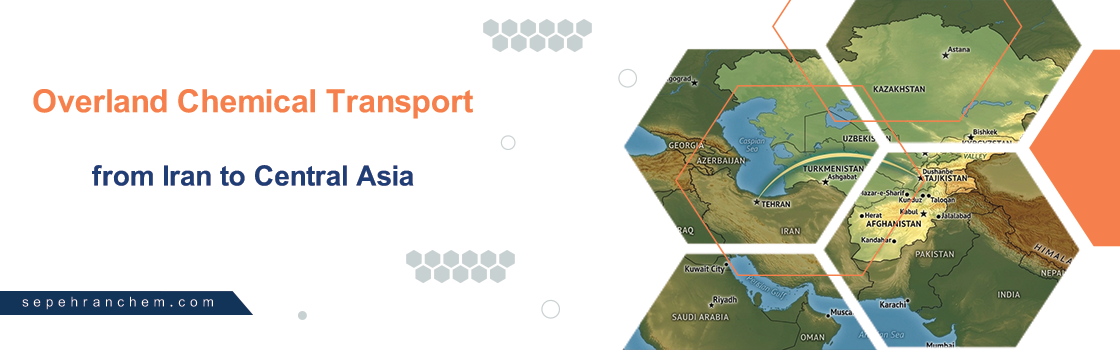
For procurement managers in Turkmenistan, Tajikistan, and other landlocked Central Asian countries, one question comes up again and again: how do you get chemical products delivered quickly, safely, and without paying a fortune in freight? The answer, in most cases, is not a container ship. It’s the road and rail network that already connects Iran to Central Asia. Iran overland export routes to Central Asia have quietly become one of the most practical solutions for buyers who don’t have direct access to a seaport. Instead of shipping goods by sea and then trucking them hundreds of kilometers inland after they arrive, buyers can bring chemicals straight across the border by rail or truck. This guide explains why that matters, which border crossings make it possible, and how it works for the specific chemical products that Central Asian industries rely on most.
Why Overland Export Routes from Iran to Central Asia Are the Smarter Choice for Landlocked Buyers
Sea freight makes sense when your factory sits next to a port. But for a company in Dushanbe, Ashgabat, or any other inland Central Asian city, a sea shipment is only half the journey. Once the cargo reaches a port, it still has to travel inland by truck or rail, often across multiple borders, before it reaches its final destination. Every extra leg of that journey adds cost, time, and risk of delay. This is exactly why overland export routes from Iran to Central Asia have become the more practical option for so many buyers.
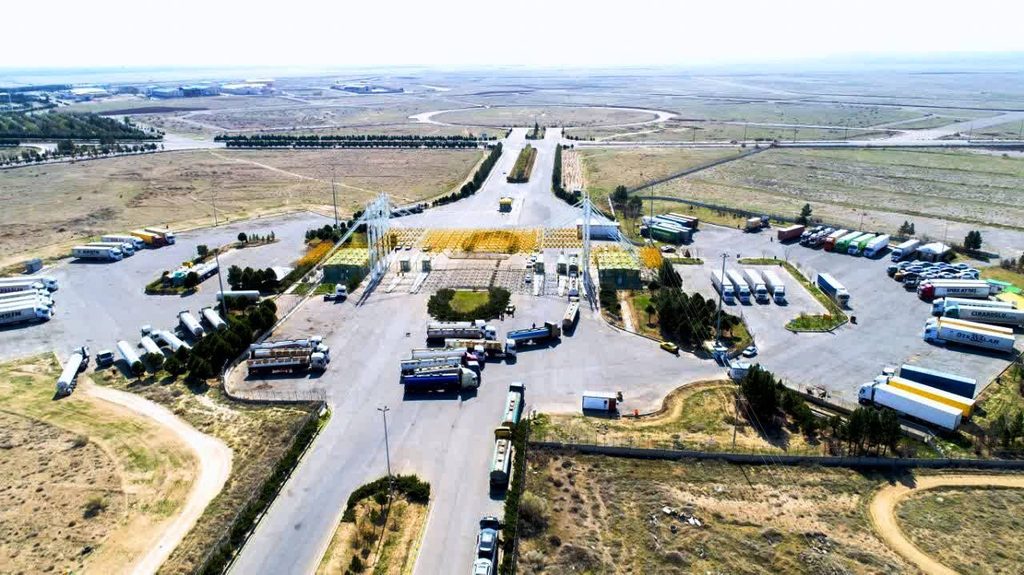
Overland transit removes several of those steps entirely. A shipment that starts in Iran and travels directly into Turkmenistan or onward toward Tajikistan skips the ocean voyage, skips the port handling fees, and skips the extra transshipment that sea freight requires for landlocked countries. In practical terms, this usually means:
- Shorter lead times. Overland transit can take days instead of the weeks a sea route plus inland trucking would require.
- Lower total freight cost. Fewer handling stages mean fewer fees stacking up along the way.
- Fewer points of failure. Every time cargo changes hands, from ship to port to truck to rail, there’s a chance of delay, damage, or paperwork issues. A direct overland route has far fewer of these handoffs.
- More predictable scheduling. Land-border supply chains are less exposed to shipping congestion, port strikes, and vessel scheduling delays that can affect sea freight timelines.
The Border Crossings That Make These Overland Export Routes Possible
Two crossings do most of the work when it comes to routing chemical exports from Iran overland into Central Asia: Sarakhs and Incheh Borun. Understanding how each one functions helps explain why this route is a realistic option, not just a theoretical shortcut.
The Sarakhs Border
Sarakhs sits on the Iran-Turkmenistan border and has long served as one of the main gateways between Iran and Central Asia. It supports both road and rail transport, which gives shippers flexibility depending on the size and nature of the shipment. Rail transport through Sarakhs connects into the wider Central Asian rail network, meaning goods that cross here can continue onward toward Uzbekistan, Tajikistan, and beyond without needing to be reloaded onto a different transport system at every border.
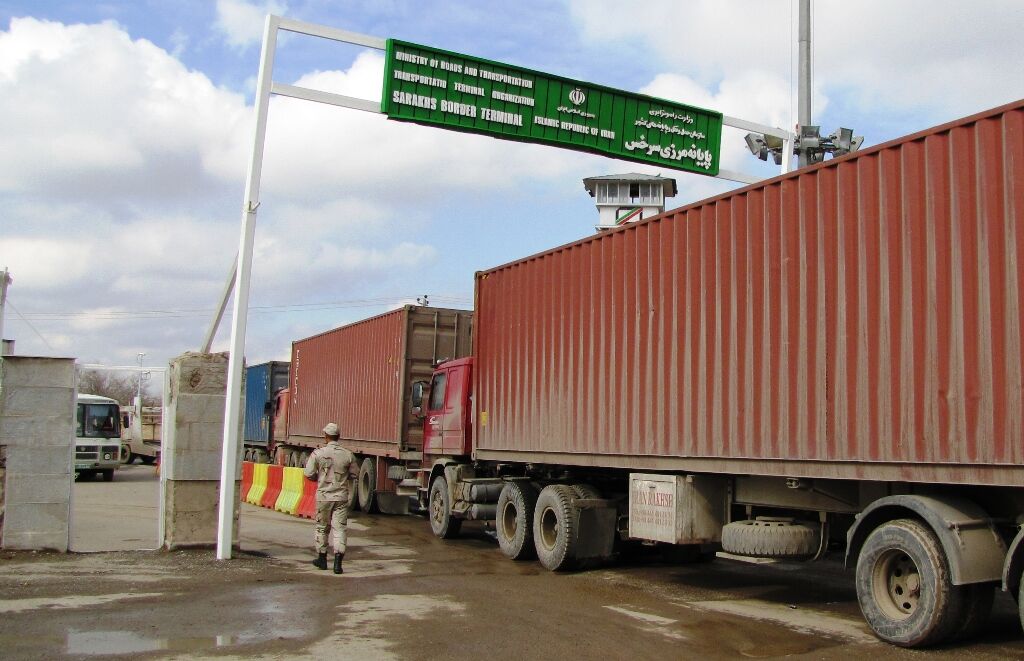
For bulk industrial chemicals, this rail connection is especially useful. Instead of loading and unloading cargo multiple times, a shipment can move in the same rail wagon for most of its journey, reducing the handling that raises the risk of damage or contamination, an important consideration for sensitive chemical products.
Incheh Borun and the Rail Link North
Incheh Borun is a newer but increasingly important crossing, built specifically to strengthen rail connectivity between Iran, Turkmenistan, and Kazakhstan. The Incheh Borun rail link was developed as part of a broader effort to connect the Persian Gulf to Central Asia and onward to Russia and Europe by rail, sometimes called the North-South transit corridor.
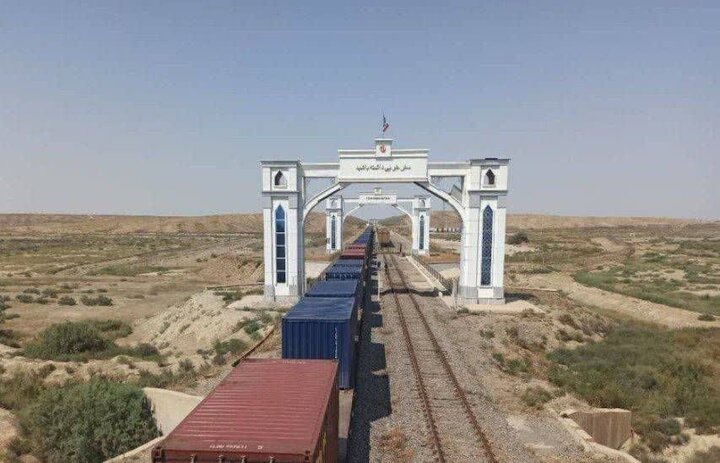
For chemical buyers, what matters most is what this means in practice: a direct rail connection that avoids the longer route around the Caspian Sea or through multiple intermediary countries. Shipments moving through Incheh Borun benefit from a more direct path north, which shortens transit times for buyers as far as Kazakhstan and beyond.
Together, Sarakhs and Incheh Borun form the backbone of Iran’s overland export routes into Central Asia, giving exporters two dependable, well-established options for getting chemical products across the border, by truck when flexibility and smaller volumes matter, and by rail when buyers need to move large, bulk quantities efficiently.
How These Overland Export Routes Serve the Chemicals Central Asia Actually Needs
Iran’s overland export routes to Central Asia aren’t just a logistics talking point; they directly affect how specific chemical products get delivered. Two products used heavily across Central Asian industries illustrate this well: sulfuric acid and sodium bicarbonate.
Sulfuric Acid
Sulfuric acid is a hazardous, corrosive material, which means every stage of its transport needs to be handled carefully and documented correctly. Sea freight typically requires this product to travel in ISO tank containers, get unloaded at a port, and then get reloaded onto a truck or train for the final leg of the journey. Each of those transfer points is a moment where something can go wrong: a delay in customs, a scheduling gap between ship and truck, or extra handling that increases risk.
An overland route through Sarakhs allows sulfuric acid to move by bulk road tanker or rail tank car in a single, more direct movement. Fewer transfer points mean fewer opportunities for delay and a more traceable chain of custody from the point of origin to the buyer’s facility, something that matters a great deal for a product that requires strict handling and correct hazard classification (UN 1830, Class 8) at every step.
Sodium Bicarbonate
Sodium bicarbonate, used across food processing, animal feed, and industrial applications throughout Central Asia, is typically shipped in bags or bulk packaging rather than tanks. This makes it well suited to both rail wagons and standard cargo trucks, which is exactly what overland transit through Sarakhs and Incheh Borun provides.
Because sodium bicarbonate is often needed in steady, recurring volumes, overland transit’s shorter, more predictable lead times make it easier for buyers to plan inventory without holding excessive safety stock.
Bulk Packaging Options for Moving Chemical Exports Overland by Rail and Truck
One practical question purchasing managers often ask is how chemical products actually get packed for the journey along these overland export routes from Iran to Central Asia. The answer depends on the product and the shipment size, but the most common formats include:
- Jumbo bags (1,000–1,250 kg). These large, flexible bulk bags are ideal for granular or powdered products like sodium bicarbonate, caustic soda flakes, or ammonium sulphate. They load easily onto both flatbed trucks and rail wagons and are simple to handle with standard forklift equipment at the destination.
- Palletized bags. For buyers who need smaller, more manageable quantities, standard 25 kg or 50 kg bags stacked on pallets offer easier handling and storage once they arrive.
- Bulk tank trucks and rail tank cars. For liquids like sulfuric acid, dedicated tanker trucks or rail tank cars keep the product contained throughout the journey, reducing exposure and handling risk.
- ISO tank containers. These can be transported by truck or placed on a rail flatcar, offering a flexible middle ground for buyers who want container-level control without full liquid bulk shipment.
Choosing the right packaging format affects not just cost, but how quickly a shipment clears customs and how easily it’s unloaded at the destination.
Documentation and Lead Times: What Purchasing Managers Should Expect on These Routes
Moving chemicals along Iran’s overland export routes to Central Asia still requires the right paperwork, and knowing what to expect helps avoid surprises. Overland shipments through Sarakhs typically move under the TIR (Transports Internationaux Routiers) system for road freight, allowing a sealed truck to cross borders under a single customs document instead of being re-cleared at every checkpoint, often saving several days compared to full clearance at each stage.
Rail shipments through Sarakhs and Incheh Borun follow established transit procedures, coordinated between rail authorities on each side of the border, with predictable documentation: export invoices, packing lists, certificates of analysis, and, for hazardous products like sulfuric acid, correct UN hazard classification and transport paperwork.
In terms of timing, overland shipments from Iran to Turkmenistan can often be completed within days of reaching the border, compared to the weeks a sea route plus inland trucking would typically require. Shipments continuing into Tajikistan take a little longer but still avoid a full sea leg. Buyers who plan around these realistic timelines, rather than sea-freight-style lead times, tend to manage inventory more efficiently and avoid unnecessary safety stock.
What This Means If You’re Sourcing Chemicals in Central Asia

For a purchasing manager in Turkmenistan or Tajikistan, the practical takeaway is simple: you don’t need to rely on sea freight and multiple transshipments to get the chemicals your operation needs. A supplier with real experience using Iran’s overland export routes to Central Asia, through crossings like Sarakhs and Incheh Borun, can offer delivery that’s faster, more predictable, and often less expensive than the alternative.
This is exactly the kind of route expertise that matters when you’re evaluating whether to export chemicals to Turkmenistan from Iran or plan a shipment to export chemicals to Tajikistan. A chemical exporter based in Iran with established overland transit experience, not just sea freight contacts, can plan your shipment around the border crossing, packaging format, and transport mode that fits your specific product and delivery timeline.
Sepehran Chemistry ships sulfuric acid, sodium bicarbonate, and a wide range of other industrial chemicals through these established land routes, combining direct manufacturing capacity with practical logistics knowledge of the Sarakhs and Incheh Borun corridors. As an Iranian petrochemical manufacturer and exporter, we work directly with buyers across Central Asia to plan overland shipments that fit their production schedules, not the other way around.
Final Thoughts
Iran’s overland export routes to Central Asia aren’t a workaround for landlocked buyers; they’re often the better option outright. With established rail links at Sarakhs and Incheh Borun, chemical shipments can move from Iran to Turkmenistan, Tajikistan, and neighboring markets faster, with fewer handling stages and more predictable delivery windows than sea freight allows. For purchasing managers who need dependable, cost-effective supply, understanding these land-border supply chains and working with a supplier who knows how to use them is one of the simplest ways to keep production running smoothly.
If your business needs a reliable overland supply of sulfuric acid, sodium bicarbonate, or other industrial chemicals, reach out to discuss packaging options, transit times, and delivery schedules suited to your specific route.