
When buying industrial chemicals in bulk, choosing the lowest quotation may seem like the easiest way to reduce costs. However, two suppliers can offer very different terms for the same product, even when their prices per ton appear similar. Differences in grade, purity, packaging, freight, delivery terms, and payment conditions can have a major impact on the final cost. Knowing how to compare chemical supplier quotes helps purchasing teams identify the offer that provides the best overall value. A fair comparison requires more than checking the quoted price. Buyers must first make sure that both suppliers are offering the same product under comparable commercial and delivery conditions.
This guide explains how to compare bulk chemical quotations, calculate the total procurement cost, and identify important differences before placing an order.
Why You Should Normalize Chemical Supplier Quotes First
Before comparing prices, make sure that both quotations use the same requirements and assumptions. This process is called normalizing quotations. It allows you to compare offers on an equal basis rather than treating different products or delivery arrangements as if they were identical. For example, Supplier A may offer a lower price per ton under FOB terms, while Supplier B includes freight to the destination under CFR terms. The first quotation may look cheaper, but it does not include the same services as the second.
The same problem occurs when one supplier offers a higher-purity grade, different packaging, or a shorter delivery time. These differences can affect both the purchase price and the product’s suitability for your operation. When considering how to compare chemical supplier quotes, start by preparing one clear Request for Quotation (RFQ). Send the same product specification, quantity, destination, packaging requirements, and preferred delivery terms to every supplier. This creates a consistent basis for evaluating their responses.
Compare Product Specifications Before Prices
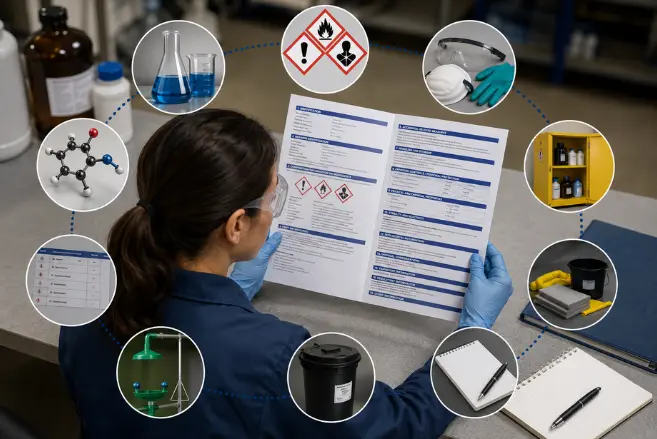
The first step in a chemical procurement comparison is to confirm that both suppliers are offering the same product to the same standard. Check the product name, grade, purity, concentration, and any other technical requirements relevant to your application. Depending on the chemical, you may also need to compare moisture content, impurity limits, particle size, or other specification details.
A lower-priced product may not be a suitable alternative if it fails to meet your production requirements. Using a different grade can affect product quality, processing conditions, or the need for additional treatment. Ask both suppliers to provide the relevant technical data and a Certificate of Analysis (COA), where available. Confirm that the stated specifications match your RFQ and clarify any differences before moving to the commercial comparison.
Also, check the offered quantity and minimum order quantity (MOQ). A supplier may quote an attractive price for a full truckload or vessel shipment, while your required volume falls below that threshold. If the supplier offers a different quantity from the one requested, the quoted unit price may not be directly comparable.
Use a Standardized Quotation Comparison Table
A comparison table makes differences between offers easier to identify. Record the same information for every supplier and mark any missing details that need clarification.
| Comparison factor | Supplier A | Supplier B |
|---|---|---|
| Product | Confirmed grade | Confirmed grade |
| Purity/specification | As quoted | As quoted |
| Quantity and MOQ | Required volume? | Required volume? |
| Packaging | Bags, drums, bulk, etc. | Bags, drums, bulk, etc. |
| Incoterm | FOB, CFR, CIF, etc. | FOB, CFR, CIF, etc. |
| Destination | Named port or location | Named port or location |
| Freight | Included or excluded | Included or excluded |
| Insurance | Included or excluded | Included or excluded |
| Lead time | Dispatch and transit estimate | Dispatch and transit estimate |
| Payment terms | Advance, credit, etc. | Advance, credit, etc. |
| Documentation | Required documents confirmed? | Required documents confirmed? |
| Inspection | Scope and responsibility | Scope and responsibility |
| Quote validity | Expiry date | Expiry date |
This framework helps you compare chemical supplier quotes without overlooking important conditions. If a supplier has not specified a particular item, request clarification rather than assuming that the cost or service is included.
Check Incoterms, Freight, and Insurance
Incoterms define important responsibilities between buyers and sellers, including delivery obligations, costs, and the point at which transport risks transfer. The selected term can significantly affect the total cost of a chemical purchase. Under FOB (Free On Board), the seller generally handles export clearance and delivers the goods on board the nominated vessel at the named port of shipment. The buyer arranges the main sea freight and insurance if required.
Under CFR (Cost and Freight), the seller pays the freight to the named destination port, but the risk generally transfers to the buyer when the goods are loaded on board at the port of shipment. Under CIF (Cost, Insurance and Freight), the seller also arranges the required minimum insurance cover under the Incoterms rules.
These terms are not interchangeable. Always check the named port, applicable Incoterms version, and the exact responsibilities stated in the quotation.A lower FOB offer may become more expensive after adding freight, insurance, destination handling, and other applicable charges. A CFR or CIF offer may be easier to evaluate because some costs are included, but you should still check what remains payable at destination.
For a fair comparison, calculate the cost of bringing each offer to the same agreed point. Do not compare an FOB price directly with a CIF price and assume that the lower figure represents the better deal.
Calculate the Total Procurement Cost

The total procurement cost is more useful than the quoted unit price alone. It includes the purchase value and the additional costs required to receive the chemical at the agreed location. Depending on the quotation and delivery terms, these costs may include:
- Product price and packaging charges
- Freight and cargo insurance
- Export and destination handling charges
- Customs duties, taxes, and clearance fees
- Inland transportation and storage
- Inspection, testing, or document-related charges
Not every cost applies to every shipment, and some may already be included in the quotation. Check each item carefully to avoid counting the same charge twice. For example, Supplier A offers a chemical at $500 per ton under FOB terms. Supplier B offers the same specification at $535 per ton under CFR terms. If the buyer’s additional freight cost for Supplier A is $45 per ton, its cost reaches $545 per ton before any other applicable expenses. Supplier B’s offer may therefore be more economical, provided the quotations cover comparable quantities, destinations, and services.
This example shows why buyers should compare bulk chemical prices using a consistent cost basis. A higher quoted price does not always mean a more expensive purchase.
Evaluate Lead Time and Delivery Reliability
Price is only one part of a supplier’s offer. The delivery schedule can also affect production planning, stock availability, and customer commitments. Compare the expected production or preparation period, dispatch date, estimated transit time, and any conditions that could change the schedule. A supplier offering ready stock may deliver sooner than one that needs to manufacture the order.
Ask whether the stated lead time begins after order confirmation, payment, production, or another milestone. Without this clarification, two apparently similar delivery estimates may describe different stages of the process. A shorter lead time can be valuable when your inventory is low or your production schedule is tight. However, do not treat an estimated date as a guarantee unless the supplier has explicitly agreed to a binding delivery commitment.
Review Payment Terms, Documentation, and Inspection
Payment terms affect cash flow and the financial risk of a purchase. One supplier may require full advance payment, while another may offer staged payments or approved credit terms. Compare these conditions alongside the quoted price rather than evaluating them separately.
Check the quotation’s validity period as well. Bulk chemical supplier pricing may change, and a quotation that expires soon may not remain available when your purchasing approval is complete. Documentation and inspection requirements also deserve attention. Confirm which commercial and technical documents will be provided, whether a COA is available, and whether an independent inspection is required. Agree on the inspection scope, timing, and responsibility for costs before confirming the order.
Missing documents or unclear acceptance criteria can delay shipment or create disputes after delivery. A complete chemical supplier quotation should make these requirements clear or identify which details still need agreement.
Choose the Best Overall Offer, Not Just the Lowest Price
Once the quotations have been normalized, compare the final cost alongside product suitability, delivery reliability, payment conditions, and supplier responsiveness. A practical evaluation can use three categories:
- Technical suitability: Does the product meet the required grade, purity, and specification?
- Commercial value: What is the total procurement cost under comparable delivery terms?
- Supply reliability: Are stock availability, lead time, documentation, and inspection arrangements acceptable?
You can assign weights to these categories based on your purchasing priorities. For example, a buyer purchasing a chemical essential to continuous production may place more importance on reliable delivery than a buyer replenishing non-urgent inventory. You should also ask suppliers to clarify missing information or revise quotations that do not match your RFQ. A fair comparison depends on complete, consistent information—not assumptions about what each offer includes.
Request a Bulk Chemical Quotation from Sepehran Chemistry
A well-prepared RFQ makes it easier to compare supplier offers and avoid unexpected costs. Before requesting a quotation, specify the chemical, required grade and purity, quantity, packaging, destination, preferred Incoterm, and expected delivery schedule. Sepehran Chemistry supplies industrial chemicals for wholesale and export requirements. Contact our team with your purchasing specifications to discuss product availability, packaging options, delivery arrangements, and the information needed for your quotation. Request a bulk chemical quotation from Sepehran Chemistry and compare your options using clear specifications and delivery terms.